Top Interactive 3D Design Services in Chandigarh
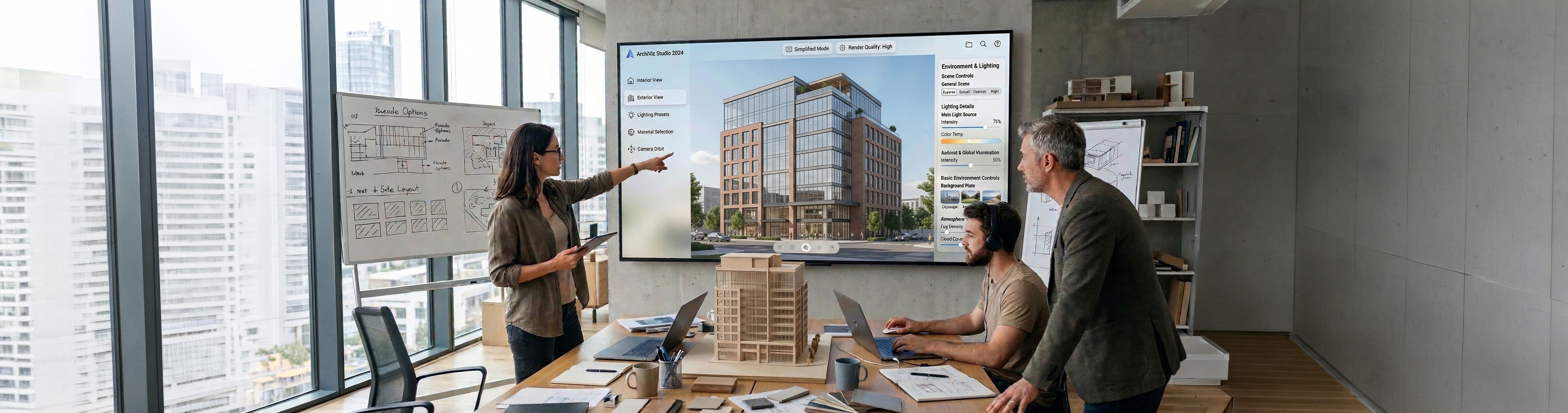
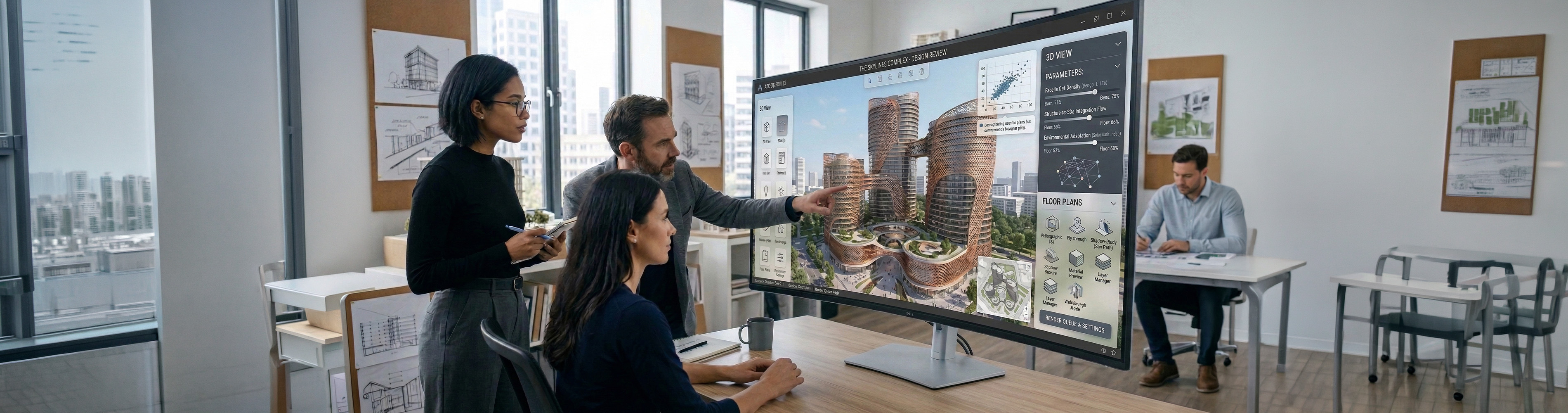
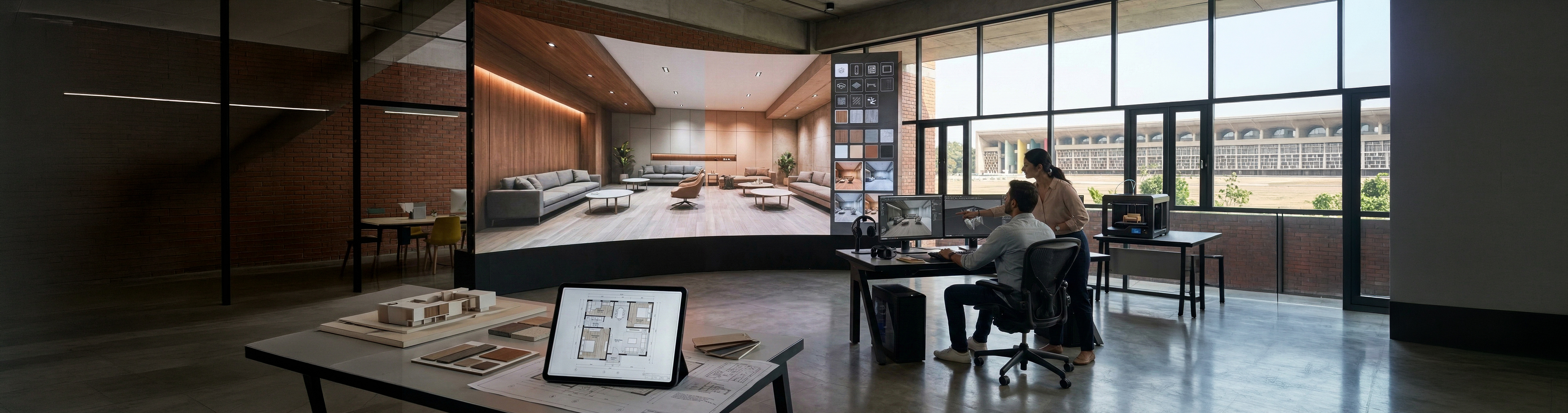
Picture yourself inside a space that doesn't even exist yet. You open doors, walk on floors, change the color of walls, and change materials and lighting before a single brick is even laid. This is the magic of interactive 3D design. In a city like Chandigarh, which is growing and changing with modern architecture and design, commercial and industrial development, and residential projects, traditional 2D design and rendering just doesn't cut it anymore. Developers, architects, interior designers, and marketers require more than just design and rendering they require experiences. Interactive 3D design is more than just design—it's an immersive environment where people can walk through spaces and make decisions with confidence before a single brick is even laid. Chandigarh has emerged as a significant center for creative studios that provide world-class interactive 3D solutions, such as architectural walkthroughs, real-time visualizations, and other immersive experiences like VR, 3D animations, and product configurators, to help businesses succeed in faster sales, smarter designs, and improved communications.
The guide will walk you through the best interactive 3D design services in Chandigarh, what sets them apart, the kind of projects they do, and how to select the right service provider for your needs.
Understanding Interactive 3D Design
Before we go through individual companies, it is essential to first understand what exactly interactive 3D design means and how it compares to conventional 3D rendering. Conventional 3D visualization techniques result in static images or video animations. While these images may look visually appealing, they remain static. We look at them. We don't touch them. We don't play with them. We don't interact with them.
Interactive 3D design, as a concept, is different from conventional 3D visualization techniques. Interactive 3D design enables users to interact in a virtual environment. Instead of a camera navigating through a scene, users can navigate through a scene. Users can rotate images, walk through a scene, zoom in, change materials, change colors, change lighting effects, change layouts, and so on.
The primary characteristics of interactive 3D design include:
- Real-time navigation
- Clickable or touch-activated components
- Material and color changeability
- Lighting and environment changeability
- Optional VR/AR support
- High-level realism
Why Interactive 3D Design Is Booming in Chandigarh
The special position of Chandigarh as a planned city with a high regard for architectural heritage makes it an ideal location for high-end visualization services.
Several factors contribute to the high demand for advanced visualization services in Chandigarh:
- Rapid Real Estate Development
The city has witnessed a boom in residential complexes, commercial spaces, and high-end villas. - Design-Focused Culture
Chandigarh has a high regard for design and aesthetics. - Highly Competitive Environment
Developers and architects require advanced tools to stay ahead in the market. - Increasing Number of Tech Professionals
The area has a high number of skilled professionals proficient in tools such as Unreal Engine, Unity, Blender, 3ds Max, and more. - Global Outsourcing Potential
Several studios based in Chandigarh serve international clients.
All these factors have made Chandigarh a hub for interactive 3D design.
What to Look for in an Interactive 3D Design Company
Technical Capabilities
This is essentially the "engine" of your 3D studio. It dictates what kind of things you can build, how flexible your project can be, and how immersive it will be for your clients.
Real-time engines (Unreal, Unity)
Studios that use real-time engines can build spaces that users can navigate in real-time, meaning they do not have to wait for hours or even days for their 3D projects to render. This allows for a much smoother experience, where users can walk, turn, and even zoom in and out as they want to explore the space.
VR/AR integration
Virtual Reality allows users to step inside their 3D space by wearing a headset, while Augmented Reality allows users to see their 3D designs superimposed over their real world by using their phones or tablets. Studios that use these technologies can provide a much deeper experience for their clients, making their presentations much more memorable.
Optimization for web, desktop, and mobile
Good 3D studios will also be able to build 3D projects that are optimized for different devices, meaning they will be able to run quickly regardless of how users choose to view them.
Design Quality
This is where technical skill meets visual storytelling.
Realistic Lighting
Accurate lighting simulation demonstrates how sunlight and artificial light interact within a space, creating a realistic mood and sense of depth.
Accurate Scale
Everything must be proportionally accurate, from rooms and doors, windows, and furniture, to ceiling heights, so spaces are logical and intuitive.
High Resolution Textures
Textured elements can really make a space come alive, whether it's marble, fabric, wood, or concrete.
Composition
Composition can help guide the viewer's eye through the space and emphasize important design elements.
Industry Experience
Each industry may need a different form of thinking and a different way of working.
Architecture and Real Estate
They know what a floor plan, elevation, and logic of a building look like, and how to translate technical drawings into a 3D world.
Interior Design
They know how to lay out furniture, circulation, lighting, and materials.
Product Visualization
They know how to effectively, attractively, and interactively present a product.
Commercial Spaces
They know how to effectively use a space.
Customization Options
Interactivity can be very effective if users can make changes themselves.
Material changes
Change between various finishes, colors, and materials in real time.
Layout variations
Try out various room layouts, wall placements, and furniture arrangements.
Branding integration
Integrate logos, brand colors, signage, and identity elements into the space.
Communication and Workflow
A smooth process is just as important as good visuals.
Clear Timelines
Milestones and delivery times help ensure the project is on track.
Feedback Loops
Review stages enable the client to provide input and make requests for changes.
Revision Policies
Agreed-upon numbers for revisions can prevent miscommunication and project delays.
Interactive Architectural Walkthroughs
Interactive architectural walkthroughs are perhaps the most revolutionary of all 3D solutions. Rather than simply viewing static images or pre-rendered animations, users are able to navigate a virtual environment as they wish. They can walk from room to room, stop at points of interest, take in details, and get a sense of scale and functionality as if they were actually inside the building.
This solution is commonly employed in residential and commercial developments, where knowledge of spatial relationships is paramount. By allowing clients to get a "hands-on" experience of the environment, interactive walkthroughs can help eliminate confusion and build confidence in design decisions. For developers, they also provide a potent pre-sales tool, allowing potential buyers to view properties before they are built.
Real-Time 3D Visualization
On the other hand, real-time 3D visualization is one step ahead, as it allows clients and designers to make instant changes in the 3D model and see the changes instantly. Whether it is changing the materials, lighting, or layout of the 3D object, real-time 3D visualization allows for instant evaluation and testing of every change.
This service is especially useful for architects, interior decorators, and product developers who need instant changes and evaluation. It allows users to make instant changes and test every possibility, which is helpful in streamlining the designing process and avoiding costly errors due to miscommunication.
Virtual Reality (VR) Experiences
Virtual Reality experiences represent interactivity to an entirely new level of immersion. Through VR headsets, users are able to enter a completely simulated world and interact with a building or space on a 1:1 scale.
Virtual Reality is especially useful for high-end residential properties, commercial properties, and architectural projects due to their ability to allow designers and users to assess lighting, circulation, and spatial planning in a way that cannot be replicated with 2D images. This sense of presence makes a design more tangible and memorable, helping stakeholders make confident decisions and providing marketers with a powerful tool to engage potential buyers.
Augmented Reality (AR) Integration
Augmented Reality allows for the overlaying of digital 3D models onto physical objects and spaces using devices such as tablets, smartphones, and smart glasses. Unlike VR, which simulates an environment that is completely virtual, AR allows users to observe how their design interacts with the physical world. For instance, furniture pieces, architectural features, and interior finishes can be "plotted" into an actual space before they are physically installed.
Augmented Reality is particularly useful for interior designers, home renovations, and furniture manufacturers. By combining the virtual and physical worlds, users can minimize uncertainty and make decisions that are not only practical but also beautiful.
Product Visualization
Another important service that is offered by interactive 3D design is product visualization. This service enables manufacturers, designers, and marketers to display products digitally in a manner that focuses on their features, functionality, and design. Users are able to rotate, zoom, or modify products in real-time, giving a better understanding of the product than a picture ever could.
In Chandigarh, this service is commonly used by furniture designers, home appliance manufacturers, and industrial product manufacturers. Interactive visualization enables clients or customers to view and interact with products digitally, which accelerates decision-making, improves communication, and increases the overall presentation quality.
Virtual Tours
Virtual tours are a combination of the benefits of interactive walkthroughs and real-time visualization. Virtual tours are commonly used in real estate and commercial projects. They enable users to navigate through spaces in a structured yet flexible manner, exploring key areas while maintaining orientation and context. They can include clickable hotspots, detailed annotations, and guided navigation to focus on important areas.
Virtual tours are an effective and cost-saving means for developers and property marketers to reach clients remotely, display multiple units or spaces without physically visiting them, and give a comprehensive understanding of the project.
Custom Interactive Environments
Some projects may require specialized 3D services, such as custom interactive environments that are suited to a business's unique requirements. This can include simulations that are used in corporate training, education, or custom visualization systems that allow multiple stakeholders to interact in real time.
Custom interactive environments provide functionality that goes beyond existing templates, allowing them to be suited to a client's unique requirements. This can include layouts, branding, or multiple user functionality. In Chandigarh, these services are being utilized by large real estate portals, technology-driven architectural firms, or entities that require precise interactive environments.
Benefits of Interactive 3D Design Services
Interactive 3D design is more than a visualization aid; it is a paradigm shift in decision-making, project delivery, and business communication. Here is a closer examination of the advantages that these services offer:
Improved Decision-Making
Conventional blueprints and picture images can be ambiguous and open to interpretation, sometimes causing confusion or miscommunication among parties. Interactive 3D design enables clients, architects, and investors to enter the environment and navigate through designs as if they were there in person. This helps eliminate misunderstandings and ensures that all parties involved are able to make informed decisions immediately.
Error Prevention and Correction
Perhaps the biggest cost of construction and product design is error correction after the fact. With 3D design, problems can be detected before anything is ever constructed. Architects can identify conflicts in space, interior designers can identify problematic furniture placement, and developers can assess structural integrity, all of which minimize the potential for costly corrections and project delays.
Faster Project Approvals
Stakeholders, investors, and regulatory authorities sometimes take time to comprehend and approve the designs. Interactive 3D models help speed up the process as they give a clear and instant idea about the project. This not only saves time but also ensures timely completion of the project.
Better Marketing & Sales
For developers and businesses, interactive 3D is not just a tool for designers, it's a marketing dynamo. Virtual tours, interactive tours, and instant visualization allow prospective buyers to experience a product or a property before it's even built. This level of engagement not only builds a strong emotional connection but also helps close the deal quickly. In a competitive market, the ability to 'sell the experience, not just the image,' can be the deciding factor.
Cost and Time Efficiency
Any change in the traditional design process, be it in construction, interior design, or product design, is bound to be expensive in both time and money. This is because interactive 3D design allows one to experiment with materials, layout, lighting, and configuration virtually. This reduces waste and makes the process more efficient by turning potential errors into safe experiments.
Technology Behind Interactive 3D Services
Interactive 3D designs employ the best software, hardware, and rendering technologies. Understanding the technology used by these services can help stakeholders understand the value of the services provided:
- Real-Time Engines (Unreal Engine, Unity): These technologies allow designers to create spaces that can be explored by users in real-time. Real-time engines can render dynamic lighting, physics, and interactive tools, providing immersive designs without the long waiting times required for the actual rendering process.
- VR/AR Hardware (Oculus, HTC Vive, Magic Leap, Mobile AR): Virtual Reality hardware can simulate an environment, while Augmented Reality hardware can project designs onto actual spaces. The combination of these technologies can provide interactive designs, allowing designers to explore their designs, simulate the client experience, and showcase their designs to clients.
- 3D Modeling Software (3ds Max, Blender, SketchUp, Revit): This is the backbone of 3D modeling and creation. These tools help designers create structures, spaces, and products with precision and accuracy in terms of size and scale.
- Rendering and Optimization: The use of high-definition textures and lighting, along with cross-platform deployment, ensures that 3D creations not only look realistic but also run smoothly on various platforms such as the internet, desktops, and mobile devices.
Industries Benefiting from 3D Services in Chandigarh
Interactive 3D designs use the best technology in terms of software, hardware, and rendering tools. Understanding the technology used by these services can help the stakeholders understand the value of the services provided:
- Real-Time Engines (Unreal Engine, Unity): The technology helps designers create spaces that can be explored by users in real-time. Real-time engines can render dynamic lighting, physics, and interactive tools, providing immersive designs without the long waiting times required for the actual rendering process.
- VR/AR Hardware (Oculus, HTC Vive, Magic Leap, Mobile AR): Virtual Reality hardware can simulate an environment, while Augmented Reality hardware can project designs onto actual spaces. The combination of these technologies can provide interactive designs, allowing designers to explore their designs, simulate the client experience, and showcase their designs to clients.
- 3D Modeling Software (3ds Max, Blender, SketchUp, Revit): This is the backbone of 3D modeling and creation. The technology helps designers create structures, spaces, and products with precision and accuracy in terms of size and scale.
- Rendering and Optimization: The use of high-definition textures and lighting, along with cross-platform deployment, ensures that 3D creations not only look realistic but also run smoothly on various platforms such as the internet, desktops, and mobile devices.
How to Choose the Right 3D Service
When choosing an interactive 3D service provider, key considerations should include:
- Technical Competency: The provider should have expertise in handling VR, AR, and other aspects of 3D, such as real-time visualization and multi-platform deployment.
- Design Quality: The provider should ensure that the scale of the objects, lighting, and overall visual quality of the 3D model are realistic and of high quality.
- Industry Knowledge: A provider with experience in the industry will ensure that the solutions offered are applicable to the specific industry.
- Customization & Flexibility: The provider should have the ability to customize and adapt to the specific needs of the project.
- Workflow & Communication: The provider should have a structured workflow and feedback process to ensure that revisions are made smoothly and easily.
Interactive 3D design service providers are essentially those service providers that can convert ideas into reality and allow users to walk through and interact with the ideas virtually. Interactive 3D solutions, such as walkthroughs, VR, AR, and virtual tours, can help users make informed decisions, reduce errors, and boost marketing and sales efforts. Interactive 3D service providers in Chandigarh are changing the way architects, designers, developers, and businesses approach projects and market them to customers.