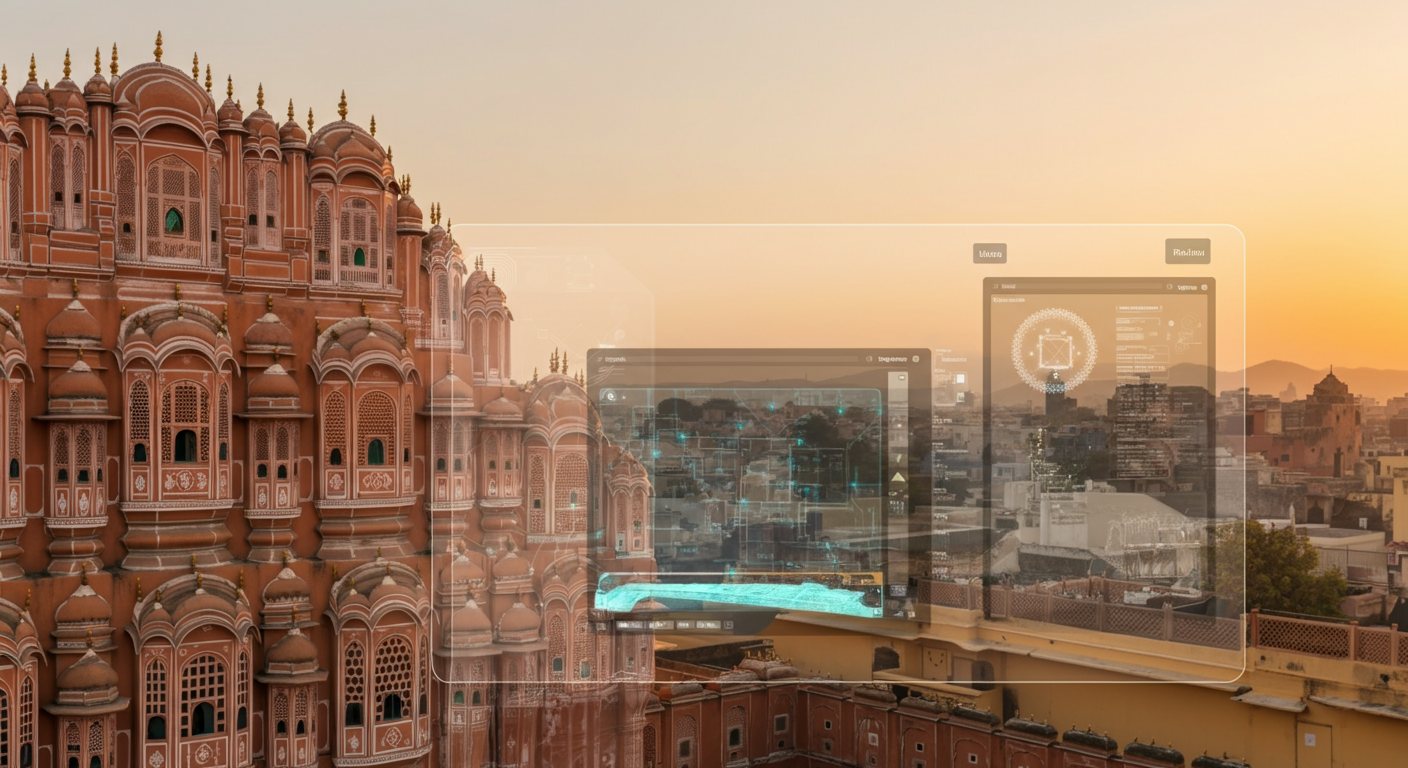
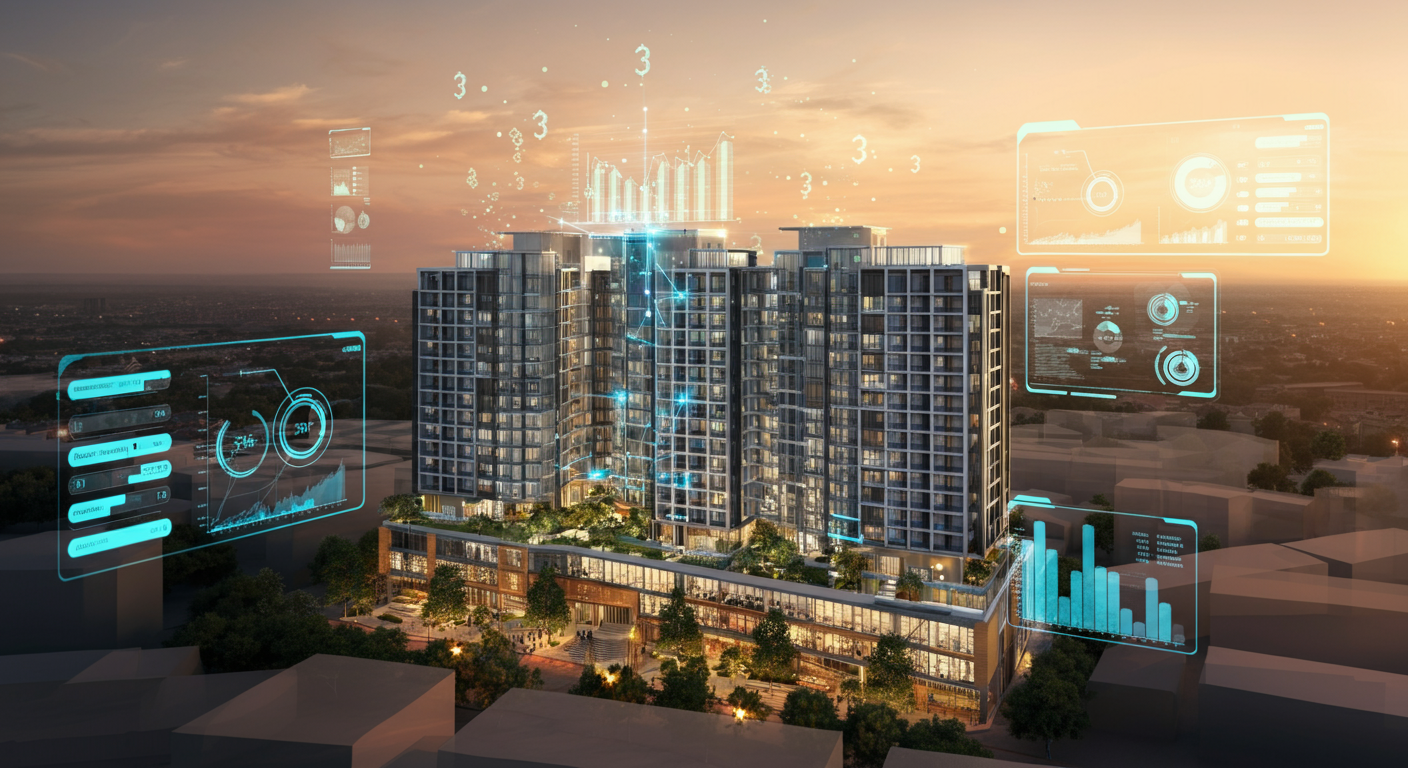
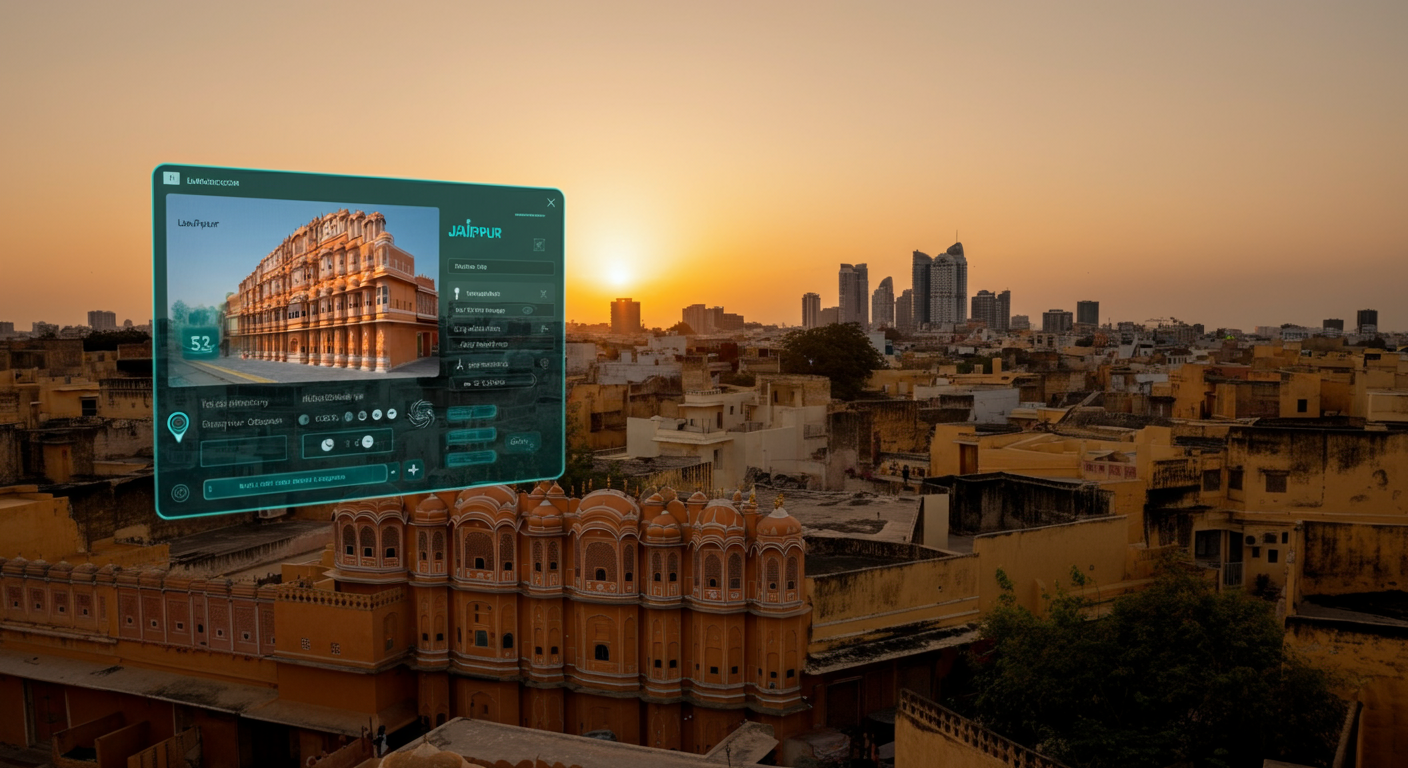
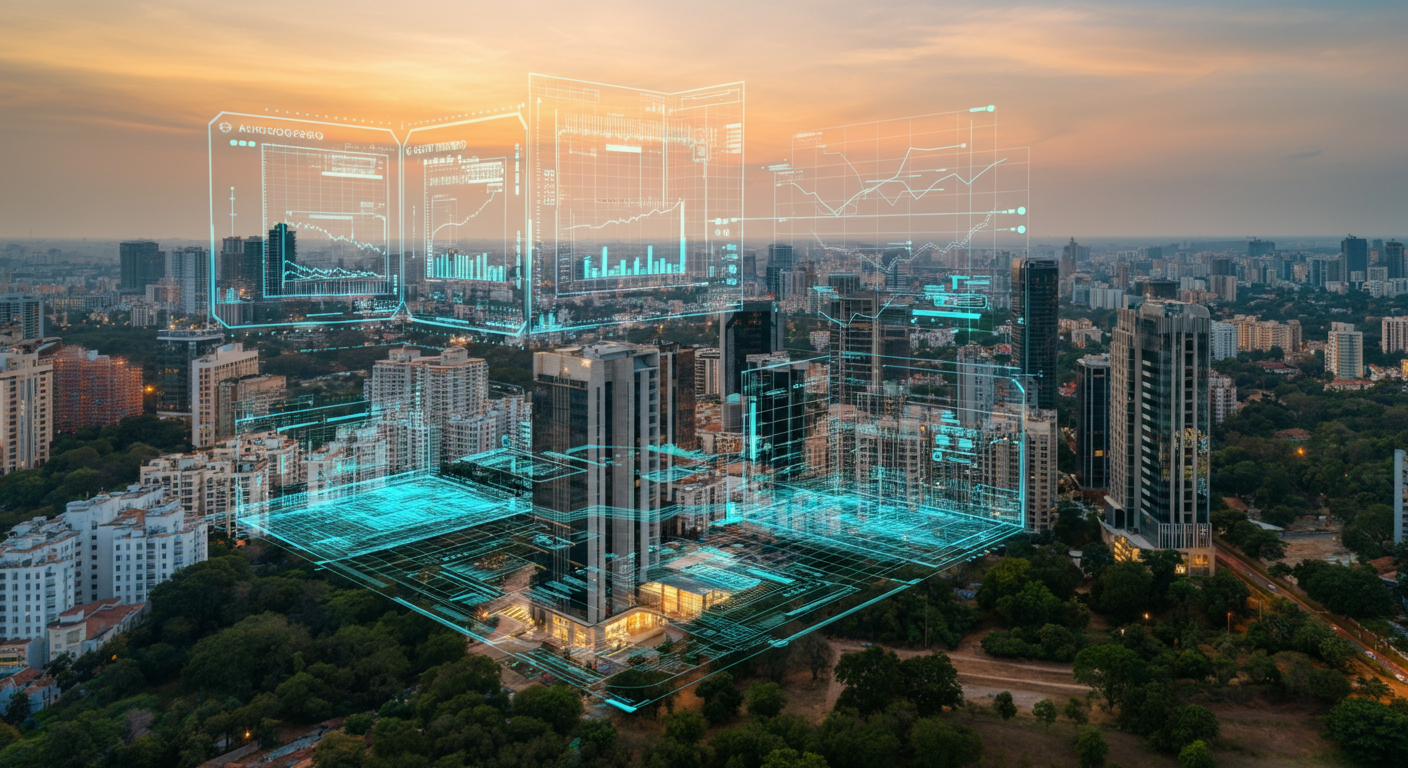
Jaipur — the Pink City — stands at a fascinating crossroads of heritage and ambition. Its rose-hued sandstone palaces and intricately carved havelis coexist with gleaming IT parks, luxury residential towers, and sprawling commercial complexes. In this dynamic environment, the ability to visualize space before it is built has never been more valuable. Interactive 3D design is the technology that makes this possible, and finding the best 3D software company in Jaipur means finding a partner who can translate your vision into an explorable, immersive digital reality.
Why Interactive 3D Design Is Important in Jaipur
Architecture and real estate have always relied on the power of imagination. Blueprints, floor plans, and technical drawings communicate dimensions and layouts to trained professionals, but they rarely convey the lived experience of a space to clients, investors, or the general public. Interactive 3D design bridges this gap decisively. It transforms abstract data into environments that people can explore, understand, and respond to emotionally — long before a single brick is laid.
For architects and developers working in Jaipur, this capability is a powerful communication tool. When presenting a new residential complex to prospective buyers, or pitching a commercial development to municipal authorities, a static rendering can only do so much. An interactive 3D walkthrough, by contrast, allows stakeholders to move through corridors, look out of windows, assess ceiling heights, and evaluate the relationship between spaces — all in real time. The result is faster decision-making, fewer costly revisions, and a stronger sense of trust between creators and clients.
Beyond individual projects, interactive 3D design serves as a broader communication tool for the city itself. Urban planners, heritage conservationists, and civic bodies can use it to model proposed changes to public spaces, simulate traffic flows, and present infrastructure upgrades to communities in a format that is genuinely accessible. In a city as visually rich and historically significant as Jaipur, this kind of transparent, immersive communication is not a luxury — it is a necessity.
💡Interactive 3D design doesn't just show what a space looks like — it communicates how it feels. This emotional dimension is what drives faster client approvals and more confident investment decisions.
Why Jaipur Needs It: Contrasting Architecture and Modern Demands
Jaipur's architectural identity is unlike any other Indian city. The old walled city, a UNESCO World Heritage Site, is a masterpiece of Rajput town planning — its grid of wide boulevards, uniform building heights, and distinctive pink-washed facades creating a coherent urban fabric that has endured for nearly three centuries. Yet just beyond the old city walls, Jaipur is growing rapidly. New residential townships, commercial hubs, hospitality developments, and educational campuses are reshaping the city's skyline at a pace that would have been unimaginable a generation ago.
This contrast creates a unique set of challenges. Developers working near heritage zones must demonstrate that their projects respect the visual and cultural character of the surrounding environment. Buyers investing in off-plan properties need confidence that what they are purchasing will match their expectations. Municipal authorities reviewing development proposals require tools that allow them to assess impact without relying solely on technical expertise.
Conventional 2D methods — floor plans, elevation drawings, and even standard 3D renders — are insufficient for these demands. They require a level of spatial literacy that most stakeholders simply do not possess. A prospective homebuyer looking at a floor plan cannot reliably judge whether a living room will feel spacious or cramped. A heritage committee reviewing an elevation drawing cannot fully assess how a new building will interact with its historic neighbours. Interactive 3D design solves these problems by allowing people to experience a space directly, without needing any specialist knowledge to interpret what they are seeing.
The ability to experience a space before it is constructed is transformative. It reduces the risk of misaligned expectations, enables more meaningful public consultation, and gives developers a competitive edge in a market where buyers are increasingly sophisticated and demanding. In Jaipur's fast-evolving real estate landscape, the best 3D software company is one that understands both the technical requirements of modern development and the cultural sensitivities of a city with a living heritage.
What Is Interactive 3D Design?
Interactive 3D design is a discipline that goes far beyond the creation of photorealistic images or pre-rendered animations. At its core, it is about giving users agency — the ability to control their experience of a digital environment in real time. Where a traditional architectural render shows you a single, fixed viewpoint, an interactive 3D experience lets you move freely through a space, open doors, change materials, adjust lighting, and explore at your own pace.
The defining characteristics of interactive 3D design are user control, real-time feedback, and configurability. A well-designed interactive experience responds instantly to user input — there is no waiting for a render to process. Users can make choices — selecting a different flooring material, repositioning a partition wall, or switching between day and night lighting — and see the results immediately. This real-time responsiveness is what makes interactive 3D design so powerful as a decision-support tool.
Modern interactive 3D experiences are built on powerful real-time rendering engines. Unreal Engine, developed by Epic Games, is widely regarded as the industry standard for high-fidelity architectural visualization, offering cinematic-quality lighting and materials that respond dynamically to user interaction. Unity is another leading platform, particularly valued for its flexibility and cross-platform capabilities. For web-based applications, WebGL enables interactive 3D experiences to run directly in a browser without any software installation, making them accessible to virtually any user on any device.
The combination of these technologies with skilled design and development expertise is what separates a truly immersive interactive experience from a simple 3D model. The best 3D software companies in Jaipur bring together artists, architects, programmers, and UX designers to create experiences that are not only visually stunning but also intuitive, informative, and genuinely useful.
Applications Across Residential, Commercial, Retail, and Education
The versatility of interactive 3D design means that its applications span virtually every sector of Jaipur's economy. From residential real estate to corporate offices, from retail environments to educational institutions, the technology is reshaping how spaces are conceived, sold, and experienced.
Residential Applications
In the residential sector, interactive 3D design is revolutionising the way properties are marketed and sold. Apartment walkthroughs allow prospective buyers to explore every room of a unit before it is built, assessing proportions, natural light, and views with a level of realism that static images cannot match. Villa tours go further, enabling users to explore not just the interior but the landscaped gardens, swimming pools, and outdoor entertaining areas that are often the deciding factor in a luxury purchase.
For developers launching new residential projects in Jaipur's competitive market, interactive 3D experiences provide a significant sales advantage. Buyers who can explore a property virtually are more likely to commit to a purchase, and they arrive at sales meetings with a clearer understanding of what they are buying — reducing the time spent on explanations and the risk of post-purchase disappointment.
Commercial Applications
Commercial real estate presents its own set of visualization challenges. Office space planning requires tenants to understand not just the square footage of a floor plate but how it can be configured to support their specific working patterns. Interactive 3D tools allow prospective tenants to experiment with different layouts — open-plan versus cellular, collaborative zones versus quiet areas — and see how each configuration would look and feel in practice.
Retail layout planning benefits similarly. A retailer considering a new store in one of Jaipur's growing commercial districts can use interactive 3D tools to test different merchandise arrangements, assess customer flow, and evaluate the visual impact of different fixture and fitting choices — all before committing to a fit-out budget.
Retail and Product Showcase Applications
Beyond physical retail spaces, interactive 3D design is transforming how products themselves are presented and sold. Product showcases built in 3D allow customers to examine items from every angle, zoom in on details, and understand scale in a way that flat photography cannot convey. Store configurators take this further, enabling customers to customise products — selecting colours, materials, dimensions, and features — and see their personalised version rendered in real time.
For Jaipur's thriving handicraft and jewellery industries, this capability is particularly valuable. Artisans and manufacturers can present their products to buyers anywhere in the world through interactive 3D experiences that convey craftsmanship and detail with a fidelity that traditional product photography struggles to match.
Education and Training Applications
Educational institutions in Jaipur are increasingly recognising the value of interactive 3D design for both marketing and pedagogy. Campus tours built in 3D allow prospective students and their families to explore facilities, hostels, sports grounds, and academic buildings from anywhere in the world — a significant advantage in attracting students from other cities and states. Training simulations bring interactive 3D into the classroom itself, enabling students to practice complex procedures in a safe, controlled digital environment.
ℹ️Interactive 3D applications are not limited to architecture. Jaipur's jewellery, textile, and handicraft industries can leverage product configurators and virtual showrooms to reach global buyers with unprecedented visual fidelity.
Key Services: Immersive Walkthroughs and Virtual Showrooms
The service portfolio of a leading 3D software company in Jaipur encompasses a range of specialised offerings, each designed to address specific communication and decision-making challenges. Understanding these services in detail helps clients identify which solutions are most relevant to their needs.
Immersive Walkthroughs
An immersive walkthrough is a real-time interactive experience that allows users to navigate freely through a 3D environment. Unlike a pre-rendered animation, which follows a fixed camera path, a walkthrough gives users complete freedom of movement — they can go where they want, look at what interests them, and spend as much time as they need in any given space.
This freedom of navigation is what makes walkthroughs so effective for spatial understanding. A user exploring a proposed apartment can assess whether the kitchen island will obstruct movement, whether the master bedroom will accommodate their furniture, and whether the balcony will provide the views they are hoping for. These are judgements that require spatial experience, not just visual information — and interactive walkthroughs provide exactly that.
For design validation, walkthroughs are equally valuable. Architects and interior designers can use them to identify spatial conflicts, assess proportions, and evaluate the effectiveness of design decisions before committing to construction drawings. The ability to catch and correct problems at the design stage — rather than during construction — represents a significant saving in both time and cost.
Virtual Showrooms
A virtual showroom is a branded interactive environment that allows customers to explore products, services, or spaces in a curated digital setting. Unlike a physical showroom, a virtual showroom is accessible from anywhere in the world, at any time, without the overhead costs of maintaining a physical space.
The best virtual showrooms are more than just digital catalogues. They are immersive brand experiences that communicate values, quality, and identity through every design decision — from the architecture of the virtual space itself to the way products are lit and presented. Users can interact with products directly, exploring them from multiple angles, accessing detailed specifications, and in many cases customising them to their preferences.
For Jaipur-based businesses looking to expand their reach beyond the local market, virtual showrooms represent a transformative opportunity. A furniture manufacturer, a jewellery house, or a real estate developer can present their offerings to buyers in Mumbai, Delhi, Dubai, or London with the same level of visual richness and interactivity that a physical visit would provide.
Interactive Training, Simulation, and 360° Virtual Tours
Interactive Training and Simulation
Interactive 3D simulation is one of the most powerful tools available for professional training. By creating digital replicas of real-world environments and equipment, simulation platforms allow trainees to practice complex, high-stakes procedures in a completely risk-free setting. Mistakes in a simulation have no real-world consequences — they are learning opportunities rather than disasters.
Industrial safety training is one of the most compelling applications. Workers in manufacturing, construction, and energy sectors can practice emergency procedures, equipment operation, and hazard identification in a simulated environment that accurately replicates the conditions they will encounter on the job. Scenario-based learning — where trainees must respond to realistic situations that unfold dynamically — has been shown to produce significantly better learning retention than traditional classroom instruction.
Medical procedure simulation is another area of rapid growth. Surgical trainees, nursing students, and paramedics can practice procedures on realistic 3D anatomical models, developing muscle memory and decision-making skills without any risk to patients. The ability to repeat procedures as many times as needed, and to receive immediate feedback on performance, accelerates skill development in ways that traditional training methods cannot match.
360° Virtual Tours
360° virtual tours offer a different kind of interactive experience — one that prioritises accessibility and ease of use over the full freedom of a real-time walkthrough. By stitching together panoramic images or renders into a navigable sequence, a 360° tour allows users to explore a space by moving between pre-defined viewpoints, looking in any direction from each position.
The key advantage of 360° tours is their accessibility. They run smoothly on any device — desktop computers, tablets, and smartphones — without requiring powerful hardware or specialist software. This makes them ideal for reaching broad audiences, including buyers who may not be technically sophisticated or who are accessing the experience on a mobile connection.
For Jaipur's hospitality sector — hotels, heritage properties, and resorts — 360° virtual tours are a particularly valuable marketing tool. Prospective guests can explore rooms, restaurants, spa facilities, and gardens before booking, building confidence and excitement that translates directly into higher conversion rates.
Interactive Visualization with Configurable Options
One of the most commercially powerful applications of interactive 3D design is the ability to offer real-time customisation. Material swapping allows users to change flooring, wall finishes, cabinetry, and upholstery with a single click, seeing the results instantly in a photorealistic environment. Layout changes enable users to experiment with different furniture arrangements or spatial configurations. Real-time customisation tools transform the sales process from a presentation into a conversation — one in which the customer is an active participant rather than a passive observer.
Augmented and Virtual Reality Experiences
Virtual reality (VR) headsets take immersive 3D experiences to their logical conclusion. By placing users inside a fully rendered digital environment, VR creates a sense of presence and scale that no screen-based experience can replicate. Walking through a proposed building in VR — feeling the proportions of rooms, experiencing the views from windows, and understanding the relationship between spaces — is as close as it is possible to get to being in a building that does not yet exist.
Augmented reality (AR) takes a complementary approach, overlaying digital content onto the physical world rather than replacing it entirely. AR applications allow users to place virtual furniture in their actual living room, visualise a proposed extension on their existing home, or see how a new building will look on an empty plot of land — all through the camera of a smartphone or tablet. This ability to overlay digital information onto physical spaces makes AR an extraordinarily powerful tool for contextualising design decisions.
❗VR and AR are not just impressive demonstrations — they are decision-making tools. Clients who experience a space in VR before construction are significantly more likely to approve designs without costly revisions, saving time and budget for all parties.
Interactive 3D in Urban Planning and Public Spaces
The application of interactive 3D design extends well beyond individual buildings and products. At the urban scale, it is becoming an essential tool for planners, policymakers, and communities grappling with the challenges of rapid growth and the need to balance development with heritage preservation.
Future streetscapes can be visualised in three dimensions, allowing decision-makers to assess the impact of proposed developments on the character and scale of existing neighbourhoods. In Jaipur, where the visual coherence of the old city is both a cultural asset and a regulatory concern, this capability is particularly valuable. A proposed hotel development near the Hawa Mahal can be modelled in its urban context, allowing heritage authorities to evaluate its visual impact before granting planning permission.
Decision-maker engagement is transformed when proposals are presented in interactive 3D rather than through technical drawings and written reports. Elected representatives, community leaders, and members of the public can all engage meaningfully with a 3D model of a proposed development — asking questions, exploring alternatives, and forming informed opinions — in a way that is simply not possible with conventional planning documents.
The balance between heritage and modernity is one of Jaipur's defining challenges. Interactive 3D tools can help navigate this tension by making the trade-offs visible and tangible. A model that shows both the proposed development and its historic context — allowing users to switch between different design options and assess their relative impact — provides a basis for informed, evidence-based decision-making that benefits everyone.
Functionality and safety testing before construction is another critical application. Interactive 3D models of public spaces — parks, plazas, transport interchanges, and pedestrian zones — can be used to simulate how people will move through and use these spaces under different conditions. Crowd flow analysis, emergency evacuation modelling, and accessibility assessment can all be conducted in the digital environment, identifying potential problems and enabling design improvements before any physical work begins.
Future Developments in 3D Software and Interactive Design
The field of interactive 3D design is evolving rapidly, driven by advances in computing power, artificial intelligence, and connectivity. Understanding the direction of these developments helps clients and practitioners anticipate how the technology will continue to transform their industries.
Integration with BIM and Planning Tools
Building Information Modelling (BIM) is the data-rich digital representation of a building's physical and functional characteristics. As BIM adoption grows in India's construction sector, the integration of BIM data with interactive 3D visualization platforms is creating powerful new workflows. Architects and engineers can work in BIM software, and their models can be automatically translated into interactive experiences that clients and stakeholders can explore — without any manual re-modelling. Changes made in the BIM model are reflected in the interactive experience in near real time, ensuring that all parties are always working from the same, up-to-date information.
Cloud-Based Platforms for Remote Access
Cloud-based rendering and streaming platforms are removing the hardware barriers that have historically limited access to high-quality interactive 3D experiences. Rather than requiring users to have powerful local hardware, cloud platforms perform the rendering on remote servers and stream the results to any device with a sufficient internet connection. This means that a client in a remote location can experience a full-fidelity interactive walkthrough on a standard laptop or even a smartphone — opening up new possibilities for remote decision-making and global sales.
AI-Powered Tools for Faster Generation
Artificial intelligence is beginning to transform the production pipeline for interactive 3D content. AI-powered tools can automate many of the time-consuming tasks involved in creating 3D environments — generating realistic textures, populating scenes with furniture and vegetation, and even suggesting design alternatives based on specified parameters. These tools are dramatically reducing the time and cost required to produce high-quality interactive experiences, making the technology accessible to a wider range of clients and projects.
Enhanced Experiences Through Better Hardware
The rapid improvement of VR and AR hardware is expanding the possibilities for immersive experiences. Lighter, more comfortable headsets with higher resolution displays and wider fields of view are making VR more accessible and more convincing. Standalone headsets that do not require a tethered computer are enabling VR experiences to be delivered in any location — a sales office, a trade show, or a client's home. Meanwhile, advances in AR glasses are moving the technology from smartphones towards wearable devices that can overlay digital information onto the physical world continuously and seamlessly.
Data Responsiveness and Real-Time Analytics
Future interactive 3D platforms will increasingly incorporate real-time data feeds, allowing digital environments to respond dynamically to changing conditions. A model of a proposed commercial development might display real-time footfall data from nearby streets, or a residential project might show how solar gain varies across different seasons and times of day. This data responsiveness will transform interactive 3D from a visualization tool into a genuine analytical platform — one that supports not just design decisions but operational planning and performance monitoring.
AR Integration into Everyday Devices
As AR capabilities become standard features of smartphones and tablets, the barrier to experiencing AR content is disappearing. Users will no longer need to download specialist apps or visit dedicated showrooms to experience AR overlays — they will be able to point their phone at any space and see proposed changes, new furniture, or planned developments superimposed on their real-world view. This democratisation of AR will make interactive 3D design a part of everyday life, not just a specialist tool for professionals.
Impact on Education, Commerce, and Cultural Activities
The broader impact of interactive 3D design on Jaipur's social and economic life extends well beyond the construction and real estate sectors. As the technology becomes more accessible and more widely adopted, it is beginning to reshape education, commerce, and cultural life in profound ways.
Democratising Design Understanding
One of the most significant impacts of interactive 3D design is its ability to democratise spatial understanding. For most of human history, the ability to read and interpret architectural drawings has been a specialist skill, accessible only to trained professionals. Interactive 3D experiences change this fundamentally. Anyone who can navigate a smartphone can explore a 3D model of a proposed building, understand its spatial qualities, and form an informed opinion about its design. This democratisation of design understanding has profound implications for public participation in planning decisions, for the quality of client-architect communication, and for the accessibility of design education.
Enabling Remote Decision-Making
The COVID-19 pandemic accelerated a shift towards remote working and remote decision-making that shows no sign of reversing. Interactive 3D design is perfectly suited to this new reality. Developers can present projects to investors in other cities or countries through shared virtual walkthroughs. Architects can conduct design reviews with clients who are unable to visit a physical office. Buyers can make purchasing decisions about properties they have never physically visited, with confidence that the interactive experience has given them a genuine understanding of what they are buying.
For Jaipur's real estate market, which attracts significant investment from the Indian diaspora and from buyers in other major cities, this capability is commercially transformative. The ability to sell properties to buyers who may never visit Jaipur before making a purchase decision opens up a vastly larger potential market.
Preserving and Presenting Cultural Heritage
Jaipur's extraordinary cultural heritage — its palaces, temples, step-wells, and historic bazaars — represents an irreplaceable asset that must be preserved for future generations. Interactive 3D design offers powerful new tools for both the preservation and the presentation of this heritage. Detailed 3D scans and models of historic structures can create permanent digital records that survive even if the physical structures are damaged or destroyed. Interactive experiences built from these models allow visitors from around the world to explore Jaipur's heritage sites in depth — understanding their history, architecture, and cultural significance through immersive digital experiences.
Museums and cultural institutions in Jaipur are beginning to explore the potential of interactive 3D for presenting their collections and telling their stories. Virtual reconstructions of historic environments — the Amber Fort as it appeared in the 17th century, or the original layout of the walled city — can bring history to life in ways that conventional exhibitions cannot. These experiences have the potential to attract new audiences, generate new revenue streams, and strengthen Jaipur's position as a global cultural destination.
The best 3D software company in Jaipur is one that understands all of these dimensions — the technical, the commercial, the cultural, and the civic. It is a company that brings together the skills, the tools, and the vision to create interactive 3D experiences that are not just visually impressive but genuinely transformative. Whether you are a developer launching a new residential project, an institution seeking to engage new audiences, or a city authority planning for the future, the right 3D software partner can help you communicate your vision with a clarity and impact that no other medium can match.
💡Jaipur's cultural heritage is a global asset. Interactive 3D experiences that bring historic sites to life digitally can attract international audiences, support conservation efforts, and generate new economic opportunities for the city.