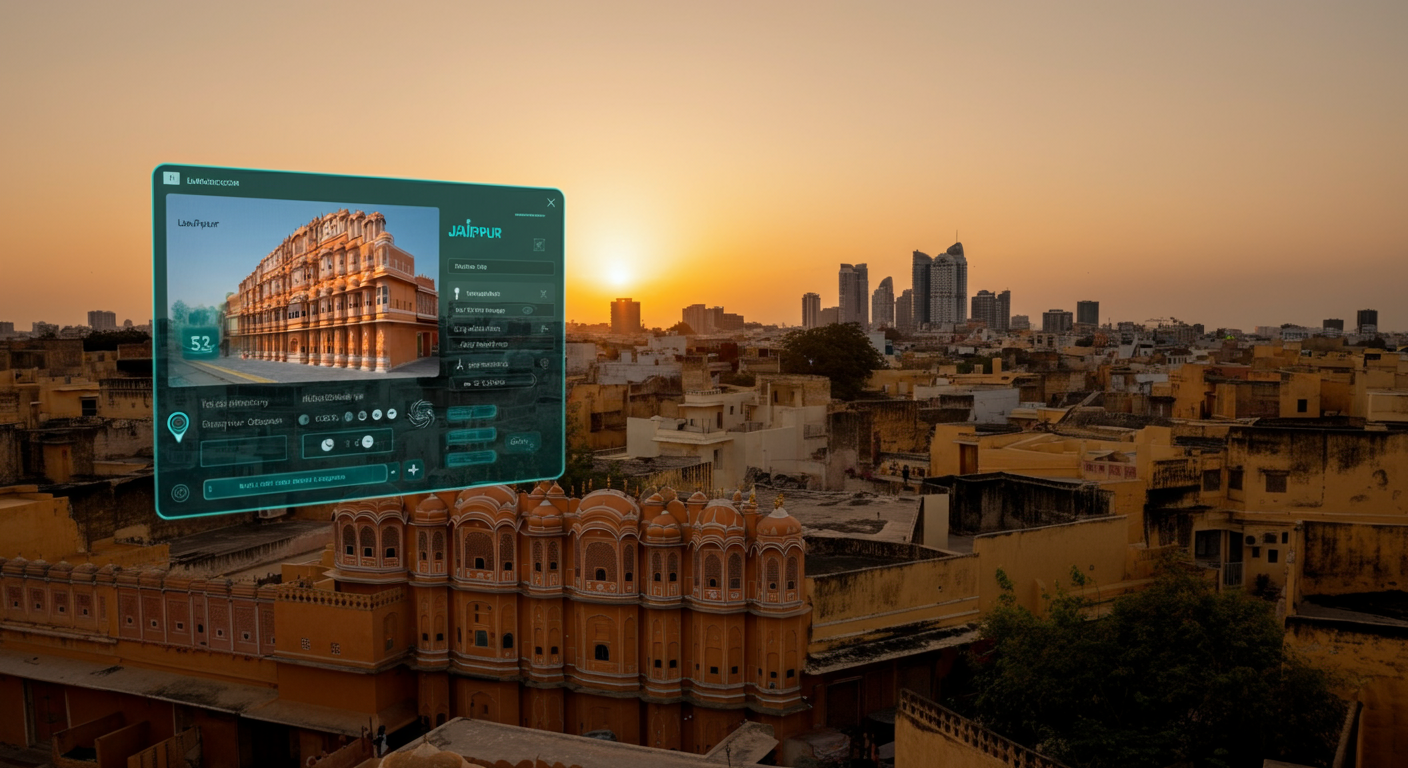
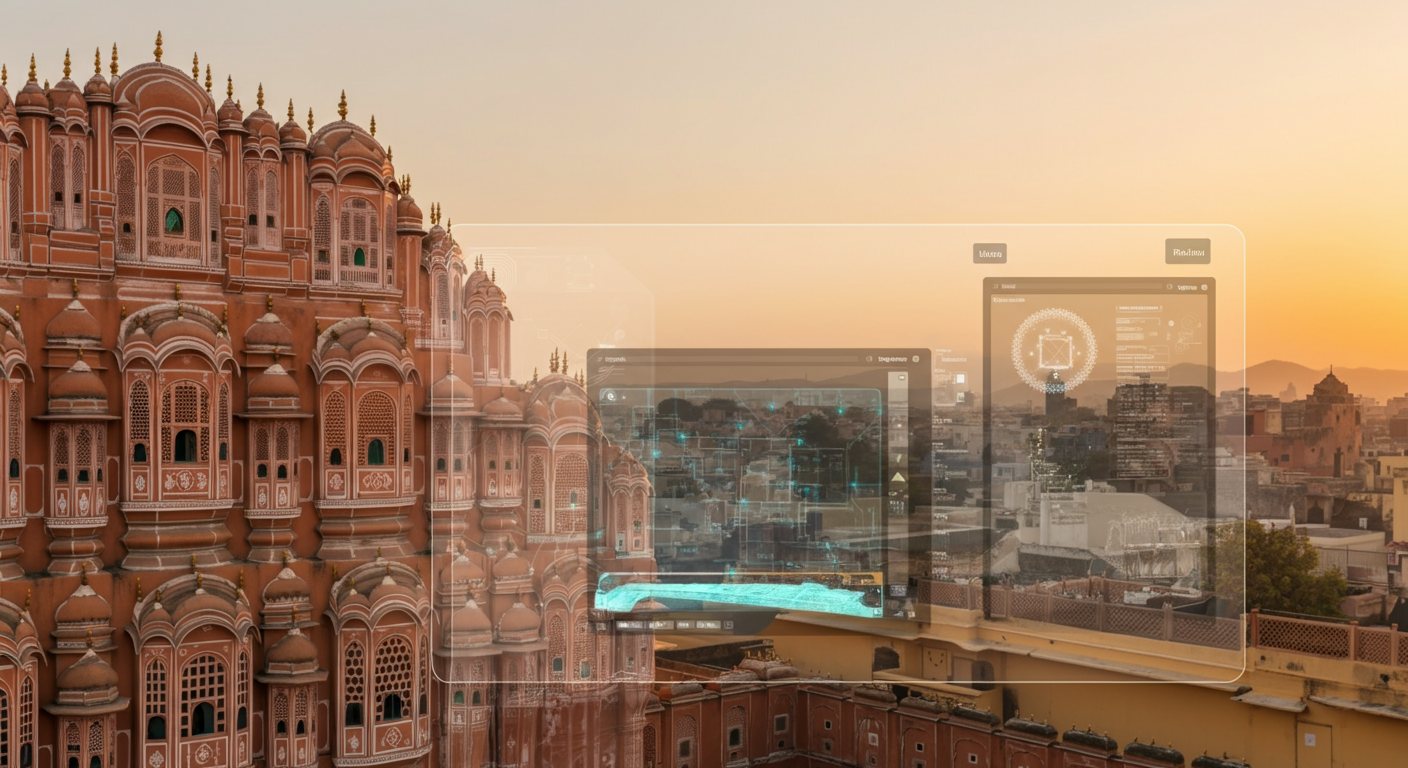
Jaipur is a city of extraordinary contrasts — a place where centuries-old havelis stand beside contemporary commercial towers, where heritage bazaars flow into modern retail corridors, and where the Pink City's sandstone warmth meets the glass-and-steel ambitions of a rapidly growing metropolis. This layered complexity makes Jaipur one of India's most visually and spatially rich cities — and it also makes it one of the most challenging environments for architects, designers, developers, and brands to communicate their visions effectively.
Interactive 3D design has emerged as the answer to this challenge. Rather than presenting static images or passive video tours, interactive 3D allows stakeholders, clients, and end-users to explore, configure, and experience spaces and products before they are built or launched. In Jaipur's unique context — where heritage preservation, modern aspiration, and rapid urban growth intersect — interactive 3D is not a luxury. It is becoming a core tool for decision-making, storytelling, and design excellence.
Why Jaipur Needs Interactive 3D Design
Jaipur is not a single-layer city. It operates simultaneously across multiple registers — historical, cultural, commercial, residential, and aspirational. The old walled city carries UNESCO World Heritage recognition, demanding that any new development or renovation respect its architectural grammar. Meanwhile, areas like Vaishali Nagar, Malviya Nagar, and the emerging corridors along the Delhi-Mumbai Industrial Corridor are seeing rapid contemporary construction that has little visual relationship with the Pink City's identity.
This multi-layered reality creates a fundamental communication problem. When an architect proposes a new mixed-use development near the old city, how do stakeholders understand how it will feel to walk through it? When a heritage hotel is being restored, how do investors visualize the finished experience before committing funds? When a luxury residential project is being marketed in Jagatpura, how do buyers emotionally connect with spaces that exist only on paper?
Traditional architectural drawings, even when beautifully rendered, cannot answer these questions. Static images freeze a single moment and a single perspective. Physical scale models are expensive, time-consuming, and impossible to share digitally. Video walkthroughs are passive — the viewer watches but cannot explore. Interactive 3D design solves all of these limitations by giving users agency: the ability to move through a space, change materials, open doors, look up at ceilings, and understand scale and proportion in a way that no other medium can replicate.
ℹ️Jaipur's real estate market is growing at over 12% annually, with significant investment in luxury residential, hospitality, and commercial sectors — all of which benefit enormously from interactive 3D visualization at the pre-construction stage.
Beyond real estate, Jaipur's thriving design, craft, and retail sectors also stand to benefit. The city is home to some of India's finest textile, jewelry, and furniture designers. Interactive 3D allows these businesses to create virtual showrooms, product configurators, and immersive brand experiences that reach customers far beyond Rajasthan — across India and internationally.
What Is Interactive 3D Design?
Interactive 3D design refers to the creation of three-dimensional digital environments, objects, or systems that respond to user input in real time. Unlike passive 3D renders or pre-rendered animations, interactive 3D experiences are user-driven: the viewer controls what they see, where they go, and what they change. The experience adapts dynamically based on choices and interactions.
At its core, interactive 3D design is powered by real-time rendering engines — most notably Unreal Engine and Unity — as well as web-based technologies like WebGL and Three.js. These platforms allow designers and developers to build environments that render photorealistic or stylized visuals at interactive frame rates, responding to user navigation, configuration choices, and environmental changes without any pre-rendering delay.
The key characteristics that define interactive 3D design are:
- User-driven navigation: The viewer controls movement, perspective, and focus rather than following a fixed camera path.
- Real-time rendering: Visuals are generated on the fly, allowing instant feedback to user actions.
- Configurability: Users can change materials, colors, layouts, and product options and see the results immediately.
- Explorability: Spaces and environments can be freely explored from any angle, at any scale.
- Accessibility: Modern interactive 3D experiences can run in web browsers, on mobile devices, or through VR/AR headsets.
The technology stack behind interactive 3D design has matured dramatically over the past decade. Unreal Engine 5's Lumen and Nanite systems deliver cinematic-quality real-time lighting and geometry. Unity's High Definition Render Pipeline (HDRP) enables photorealistic environments for architectural visualization. WebGL and WebGPU bring interactive 3D directly into browsers without plugins. Together, these technologies have made interactive 3D accessible, scalable, and commercially viable for projects of all sizes.
Real-Time Interactive Architectural Walkthroughs
The most transformative application of interactive 3D in Jaipur's architectural and real estate sector is the real-time interactive walkthrough. Unlike a pre-rendered video tour — where the camera follows a fixed path and the viewer is a passive observer — a real-time interactive walkthrough gives users complete freedom of movement within a fully realized 3D environment.
Users can walk through rooms at their own pace, pause to examine details, look up at architectural features, step out onto balconies, and navigate between floors — all in real time, with photorealistic lighting and material rendering. This freedom of exploration creates a fundamentally different understanding of space compared to any static or passive medium.
For Jaipur's architectural context, real-time walkthroughs offer several specific advantages:
- Spatial relationships: Users intuitively understand how rooms connect, how corridors flow, and how public and private zones relate to each other — something that floor plans cannot convey.
- Scale and proportion: The human-scale perspective of a walkthrough makes ceiling heights, room dimensions, and window sizes immediately legible in a way that drawings and renders cannot match.
- Heritage context integration: Walkthroughs can be set within accurate 3D models of Jaipur's existing urban fabric, allowing viewers to understand how a new building relates to its historic surroundings.
- Lighting simulation: Real-time global illumination shows how natural light moves through a space at different times of day — critical for understanding the quality of living and working environments.
- Pre-sales engagement: Developers can present unbuilt projects to buyers with a level of experiential clarity that dramatically accelerates purchase decisions.
💡Real-time architectural walkthroughs built on Unreal Engine 5 can incorporate Jaipur's actual sun path data, allowing clients to experience how natural light enters a space during Rajasthan's intense summer afternoons or cooler winter mornings — a powerful tool for passive design validation.
The production of a high-quality real-time walkthrough begins with accurate 3D modeling — typically from architectural CAD drawings or BIM models — followed by material assignment, lighting setup, and environment creation. The final deliverable is an executable application or a cloud-streamed experience that clients can access on their own devices, share with stakeholders, and use throughout the design and sales process.
Web-Based Interactive 3D Experiences
One of the most significant recent developments in interactive 3D design is the maturation of web-based delivery. Powered by WebGL, Three.js, Babylon.js, and increasingly WebGPU, interactive 3D experiences can now run directly in standard web browsers — on desktops, laptops, tablets, and smartphones — without requiring any software installation or specialized hardware.
This accessibility breakthrough is particularly significant for Jaipur's business landscape. A real estate developer can embed an interactive 3D model of their project directly on their website. A furniture brand can offer a web-based room configurator that customers use from their phones. A heritage tourism organization can publish an interactive 3D exploration of a historic monument that visitors access before their trip.
The key advantages of web-based interactive 3D experiences include:
- Zero installation barrier: Users access the experience through a URL — no downloads, no plugins, no app store.
- Universal shareability: A single link can be shared via email, WhatsApp, or social media, reaching clients anywhere in India or internationally.
- Analytics integration: Web-based experiences can track user behavior — which areas they explore most, how long they spend in each space, which configurations they select.
- CRM and e-commerce integration: Web 3D experiences can connect directly to booking systems, inquiry forms, and purchase flows.
- Continuous updates: Unlike printed brochures or pre-rendered videos, web-based 3D experiences can be updated as designs evolve.
For Jaipur's growing startup ecosystem and established businesses alike, web-based interactive 3D represents a cost-effective, high-impact way to differentiate their digital presence and deliver experiences that competitors using static imagery simply cannot match.
Interactive Material and Layout Configurators
Among the most commercially powerful applications of interactive 3D design is the real-time configurator — a tool that allows users to customize materials, finishes, colors, and layouts and see the results instantly in a photorealistic 3D environment. Configurators bridge the gap between product catalog and purchase decision, giving customers the confidence that comes from seeing exactly what they are choosing.
In Jaipur's context, material and layout configurators have particularly compelling applications across several sectors:
- Residential real estate: Buyers can select flooring materials, wall finishes, kitchen countertop options, and bathroom tile combinations — seeing each choice rendered in photorealistic quality within their actual apartment layout.
- Furniture and interior design: Jaipur's renowned furniture manufacturers can offer configurators that let customers choose wood species, upholstery fabrics, leg finishes, and dimensions — seeing the complete piece in a realistic room setting.
- Textile and fabric: The city's textile industry can use configurators to show how different fabric patterns, colors, and weaves look when applied to garments, upholstery, or home furnishings.
- Hospitality and commercial interiors: Hotel developers and commercial space designers can use layout configurators to explore different furniture arrangements, partition configurations, and finish packages.
❗Studies consistently show that interactive product configurators increase purchase conversion rates by 30–40% compared to static product imagery, because they give customers the confidence of seeing exactly what they are buying before committing.
The technical architecture of a configurator involves a real-time 3D engine (typically WebGL-based for browser delivery or Unreal Engine for high-fidelity desktop/tablet experiences), a material library with physically based rendering (PBR) textures, a configuration logic layer that manages valid combinations, and a user interface that makes the selection process intuitive and enjoyable.
Advanced configurators can also generate instant pricing updates as options are selected, produce specification sheets for manufacturing, and integrate with e-commerce checkout flows — turning a visualization tool into a complete sales and production pipeline.
Immersive Virtual Showrooms and 360° Environments
Virtual showrooms represent a convergence of interactive 3D design, brand storytelling, and digital commerce. Rather than a simple product catalog or a static website, a virtual showroom is a fully realized 3D branded environment — a space that visitors can explore, where products are presented in context, and where the brand's identity is expressed through architecture, lighting, materials, and atmosphere.
For Jaipur's luxury and premium brands — in jewelry, textiles, furniture, hospitality, and real estate — virtual showrooms offer a way to deliver a premium brand experience to customers who cannot visit in person. A Jaipur-based jewelry brand can create a virtual boutique that evokes the grandeur of a Rajasthani palace, where each piece is displayed in a beautifully lit alcove and customers can examine it from every angle. A furniture manufacturer can build a virtual design studio where collections are shown in aspirational room settings.
360-degree interactive environments extend this concept to panoramic exploration. Using photogrammetry-captured or CGI-created 360° imagery, these experiences allow users to look in any direction from a fixed point, navigate between hotspots, and access contextual information about what they are seeing. Key features include:
- Hotspot navigation: Clickable points of interest that reveal product information, pricing, or links to purchase.
- Multi-room exploration: Users navigate between different areas of a showroom or property through intuitive transition points.
- Embedded media: Video, audio, and text content can be embedded within the 360° environment to provide context and storytelling.
- VR compatibility: 360° environments can be experienced in VR headsets for full immersion, or on standard screens for accessibility.
For heritage tourism — one of Jaipur's most important economic sectors — 360° interactive environments offer a powerful way to engage visitors before they arrive, provide guided digital experiences within monuments, and create lasting digital archives of spaces that may change over time.
Virtual Reality and Augmented Reality Experiences
Virtual Reality (VR) and Augmented Reality (AR) represent the most immersive end of the interactive 3D spectrum. While web-based and desktop interactive 3D experiences are powerful, VR and AR add dimensions of presence and spatial understanding that screen-based media cannot replicate.
VR experiences, delivered through headsets such as the Meta Quest series or high-end PC-connected systems, place users inside a fully realized 3D environment at true human scale. The sense of presence — the feeling of actually being in a space — is qualitatively different from any screen-based experience. For architectural visualization, this means that a client standing in a VR model of their future home can genuinely feel whether the ceiling height is comfortable, whether the kitchen island is the right size, and whether the view from the master bedroom is as compelling as the architect promised.
In Jaipur's context, VR experiences are being applied across several domains:
- Luxury real estate sales: High-net-worth buyers, including NRI investors, can experience a property in VR before making a purchase decision — eliminating the need for a physical site visit.
- Heritage documentation and tourism: VR recreations of historical spaces — including periods of Jaipur's history that no longer exist physically — allow visitors to experience the city's past in an unprecedented way.
- Design review and collaboration: Architects and clients can meet in a shared VR environment to review and discuss design decisions in real time, regardless of their physical location.
- Training and simulation: Industrial facilities, hospitality operations, and retail environments can use VR for staff training in realistic simulated settings.
Augmented Reality (AR) takes a complementary approach — rather than replacing the physical world with a virtual one, AR overlays digital information and 3D objects onto the real environment. Using smartphones, tablets, or AR glasses, users can see how a piece of furniture would look in their actual room, how a proposed building would appear on an actual site, or how a product would look in their hands — all in real time.
💡AR-based visualization tools are particularly powerful for Jaipur's retail and e-commerce sector. Customers can use their smartphones to see how a Rajasthani handicraft, a piece of furniture, or a decorative item would look in their own home before purchasing — dramatically reducing return rates and increasing buyer confidence.
Interactive training and simulation environments represent another significant application of VR/AR technology. In Jaipur's growing industrial, hospitality, and healthcare sectors, VR simulations allow staff to practice complex procedures, emergency responses, and operational workflows in a risk-free virtual environment. Scenario-based learning in VR has been shown to improve knowledge retention and skill transfer significantly compared to traditional training methods.
Future Outlook for Interactive 3D in Jaipur
The trajectory of interactive 3D design in Jaipur points toward deeper integration, greater accessibility, and increasingly sophisticated applications. Several converging trends will shape this evolution over the coming years.
Spatial intelligence and AI integration will transform how interactive 3D environments are created and experienced. AI-driven tools are already beginning to automate aspects of 3D modeling, material generation, and environment population — reducing production time and cost while increasing the quality and detail of interactive experiences. In the near future, AI will enable interactive 3D environments that adapt dynamically to user behavior, preferences, and context.
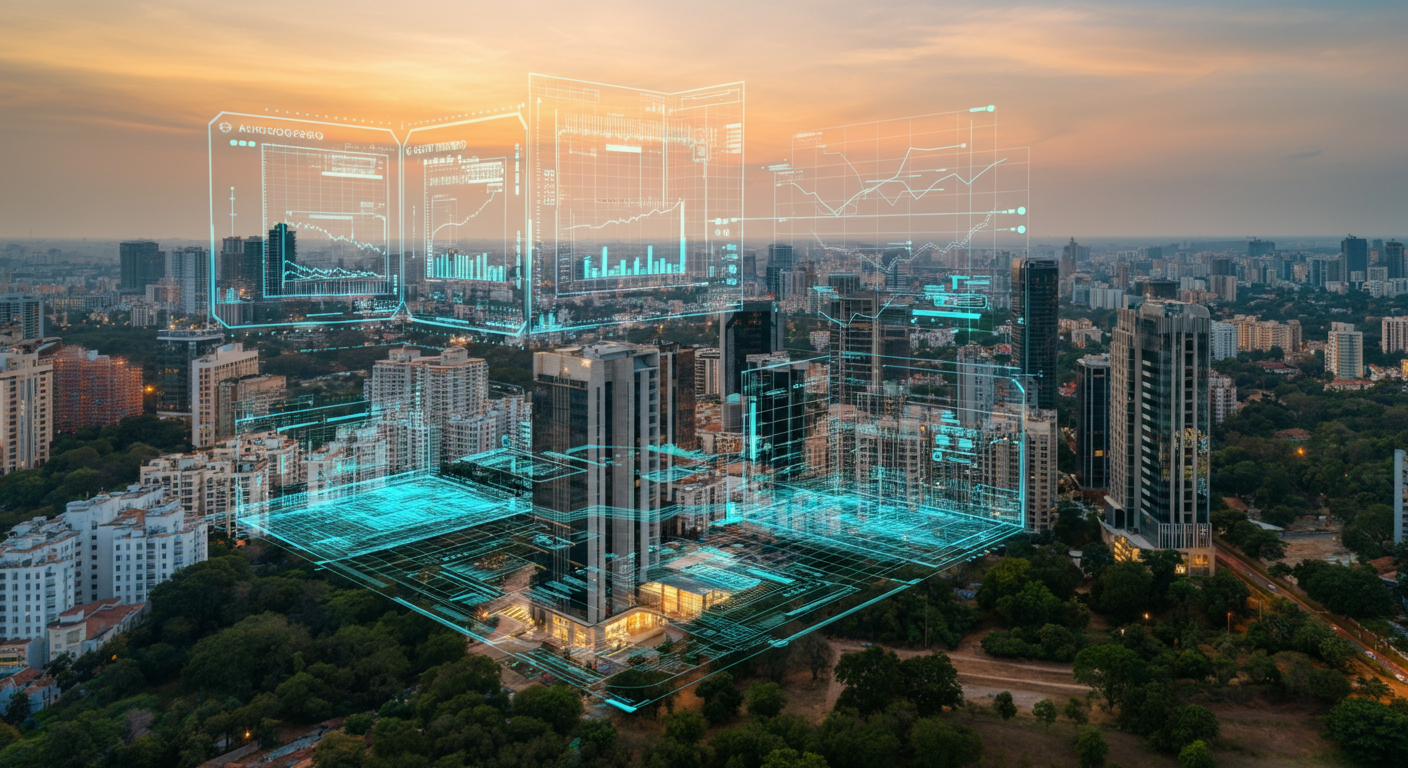
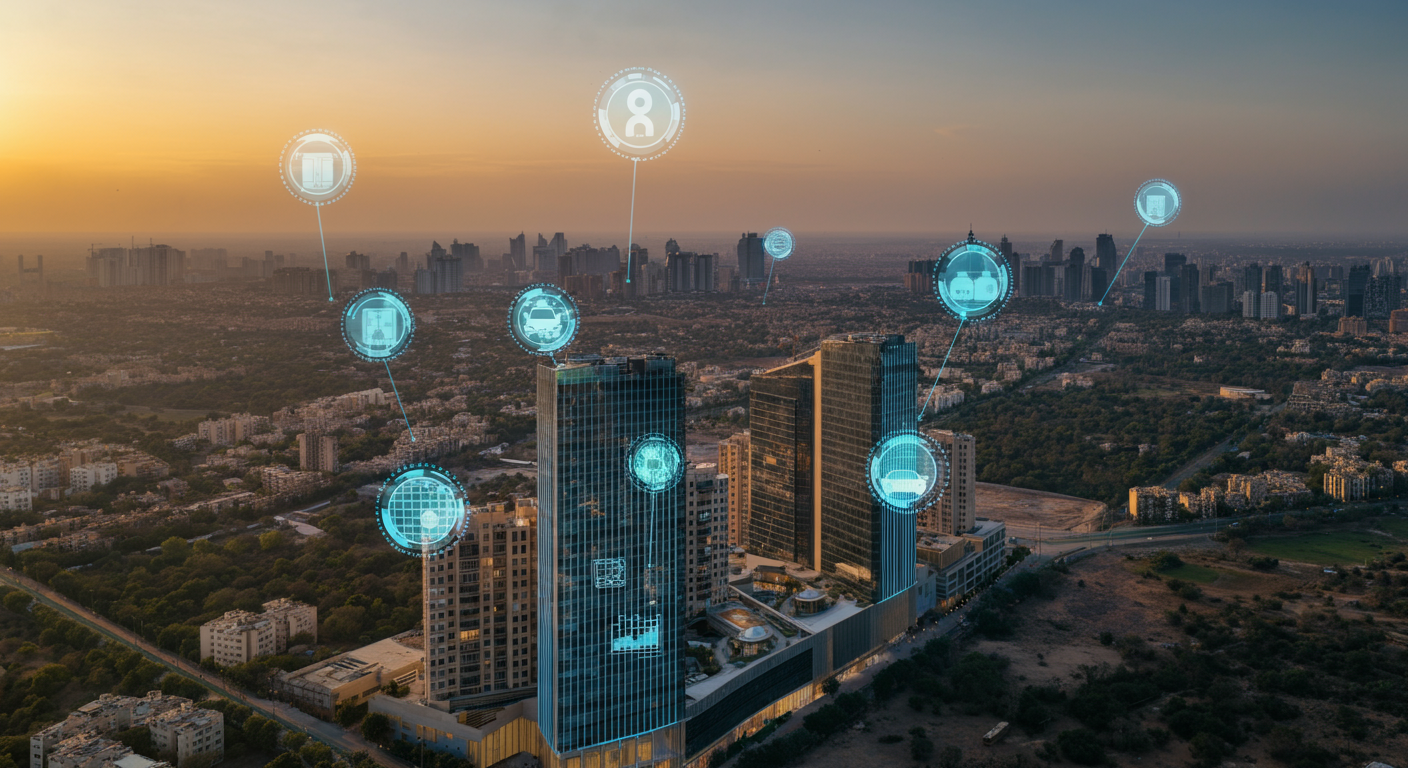
Data integration will make interactive 3D environments increasingly intelligent. Digital twin technology — which creates a live, data-connected 3D model of a physical asset — will allow Jaipur's buildings, infrastructure, and urban spaces to be monitored, analyzed, and managed through interactive 3D interfaces. A building manager will be able to walk through a digital twin of their facility, seeing real-time data about energy consumption, occupancy, and maintenance needs overlaid on the 3D model.
Accessibility improvements will continue to democratize interactive 3D. As WebGPU matures and mobile hardware becomes more powerful, high-quality interactive 3D experiences will be accessible on entry-level smartphones — reaching a much broader audience than today. This is particularly significant for Jaipur, where mobile internet penetration is high and many potential users access digital content primarily through their phones.
Cultural storytelling through interactive 3D represents one of the most exciting opportunities for Jaipur specifically. The city's extraordinary heritage — its palaces, step wells, bazaars, and living craft traditions — can be documented, interpreted, and shared through interactive 3D experiences that go far beyond what photographs or videos can convey. Interactive 3D heritage experiences can bring Jaipur's history to life for global audiences, support conservation efforts with detailed digital documentation, and create new forms of cultural tourism that extend the city's reach far beyond its physical boundaries.
Trust relationships between clients and design professionals will be fundamentally transformed by interactive 3D. When a client can walk through their future home before a single brick is laid, when a buyer can configure their apartment finishes and see the result in photorealistic quality, when an investor can experience a hospitality project in VR before committing capital — the uncertainty and anxiety that traditionally accompany major design and construction decisions are dramatically reduced. This trust-building capacity of interactive 3D will make it an indispensable tool for Jaipur's design and development community.
❗As Jaipur positions itself as a smart city and a global design destination, interactive 3D will become a core element of how the city presents itself — to investors, to tourists, to residents, and to the world. The firms and professionals who master these tools today will define Jaipur's design identity for the next generation.
The heritage-meets-modern context that makes Jaipur unique also makes it an ideal proving ground for interactive 3D design. The challenges of communicating complex spatial relationships, of bridging historical and contemporary aesthetics, of engaging diverse audiences from local residents to international investors — these are precisely the challenges that interactive 3D is best equipped to address. Jaipur's design landscape is on the cusp of a transformation, and interactive 3D design is at its center.