How PropTech is improving the off-plan property buying experience
Written By
Harshil Oza
Last Updated On
27 October 2026
Reading Time
12 minutes
Introduction
If you were to pay a deposit on an apartment that you had never seen, what would you do?
After viewing the floor plan, the brochure, and the developer's website, you are ready to make an offer. In the render, the living room appears spacious, and the balcony appears beautiful.
However, you are still unsure about how the apartment will feel. What is the distance from the next building? What is the distance between your tower and the swimming pool? Would it be better to choose another unit?
It's not uncommon for buyers to have questions about off-plan properties, but traditional marketing materials do not always answer them.
PropTech makes it easier for buyers to investigate developments before they are complete. Rather than relying on selected images and descriptions, buyers can explore buildings, view individual apartments, and learn how the development fits together.
What is PropTech in off-plan real estate, and how does it work?
Property technology, or PropTech, includes digital tools used in the development, marketing, sales, and management of real estate.
People can use these tools to evaluate properties that have not yet been built in off-plan real estate.
An apartment developer might display the interior of an apartment with a virtual tour, show the development with an interactive 3D model or connect individual units with property information using a digital twin.
From static brochures to interactive developments
In traditional property marketing, floor plans, architectural renderings, brochures, and model apartments are heavily used.
It is still possible to use these materials. Measurements are included on a floor plan, whereas renderings show how a space is intended to look.
There is a limitation to what buyers can see, because they are only able to see the information and viewpoints that are selected for them.
By using interactive property visualizations, they will be able to explore properties more independently. When selecting an apartment, a buyer will examine the location, towers, and floors of the building.
As a result, looking at a presentation becomes less about evaluating a home and more about investigating it.
How digital twins connect visuals with property information
Digital twins in real estate represent buildings or developments digitally and connect their digital representation with relevant information.
This could include apartment layouts, areas, orientations, specifications, and stock status for an off-plan residential project.
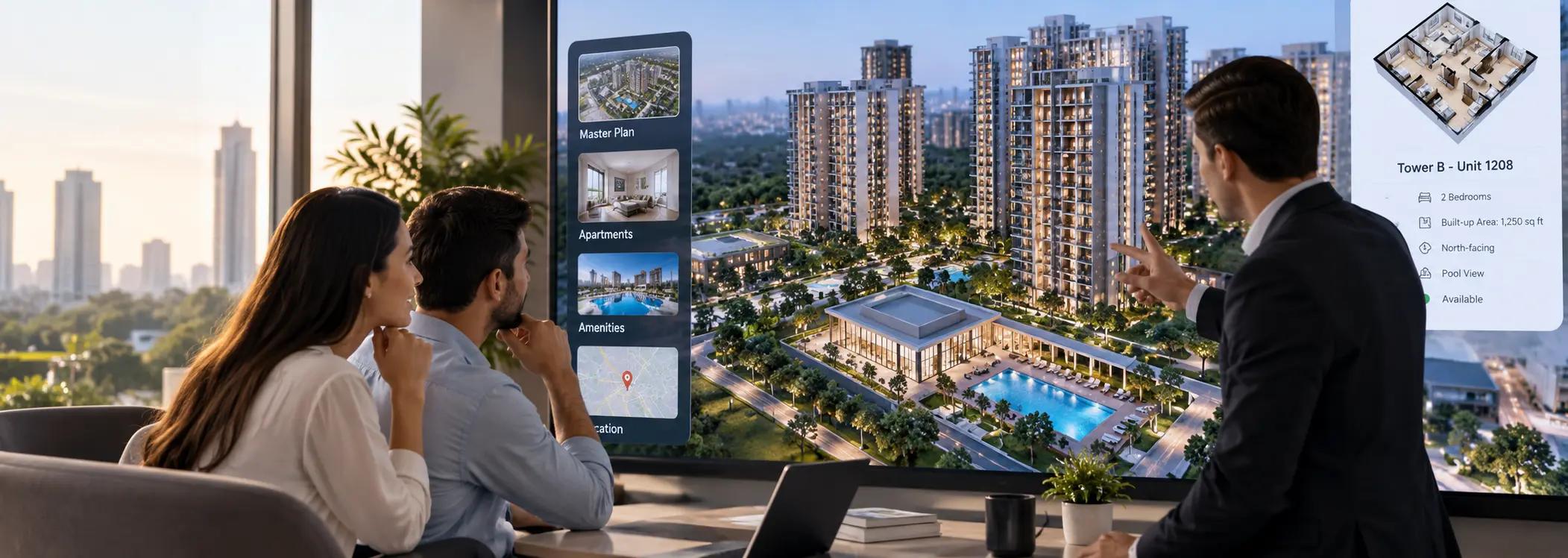
Let's say a buyer chooses apartment 1208 in Tower B.
An interactive experience could show the location of the apartment, its floor plan, and its details.
Due to the fact that buyers can see the property described, the information has context.
There are some digital twins that do not have live availability or pricing. The developer's ability to maintain data depends on how the integrations are built and maintained.
How does PropTech help buyers explore off-plan properties?
In off-plan properties, the most difficult part is understanding a property that has not yet been viewed.
Through PropTech solutions, part of that problem is addressed by making it easier to examine and evaluate proposed developments.
Know the process before you start
Imagine a residential complex with six towers, landscaped courtyards, a clubhouse, children's play areas, and multiple entrances.
Each feature might be presented separately in a brochure. Afterward, buyers must figure out how everything fits together.
Using an interactive development model, you can see how things are arranged in general.
People with children might want to know the distance between their building and the play area. There is a possibility that another buyer will prefer a tower that is not near the main road.
By exploring the master plan, buyers can consider those everyday details rather than just the architecture.
Exploring apartment positions and surroundings
Despite having identical floor plans, two apartments can offer very different living experiences.
A garden might be viewed from a distance. A neighboring tower could be another option. There may also be differences in their floor levels, orientation, and proximity to shared spaces.
Those differences may not be explained by a conventional floor plan.
Using interactive visualizations, each apartment can be positioned within the building, making its location more intuitive.
The proposed outlook and surrounding structures can be viewed from different perspectives by buyers.
Rather than guaranteeing the final outcome, these views represent the planned development.
Comparing apartment layouts and options
When deciding which apartment to rent, it is often necessary to balance competing priorities.
The arrangement of the kitchen in one unit may appeal to a buyer, but the larger balcony may appeal to another. The tower might be better suited to a third apartment.
The availability of relevant layouts and unit information can facilitate comparisons when using interactive experiences.
Buyers can review all their options in one place instead of searching through PDFs repeatedly.
Technology doesn't determine which home is best for you. By doing so, it becomes clearer what the differences are.
Why does a digital property experience matter for remote buyers?
The distance between a developer's development and the home of an off-plan buyer may be hundreds or thousands of miles.
It is possible for someone based in London to consider apartments in Dubai. A buyer from overseas may be comparing residential developments in Mumbai, Pune, and Ahmedabad.
Visiting every shortlisted development isn't always feasible.
Using a digital property experience, buyers can begin their property research from anywhere.
Researching a development without visiting the sales office
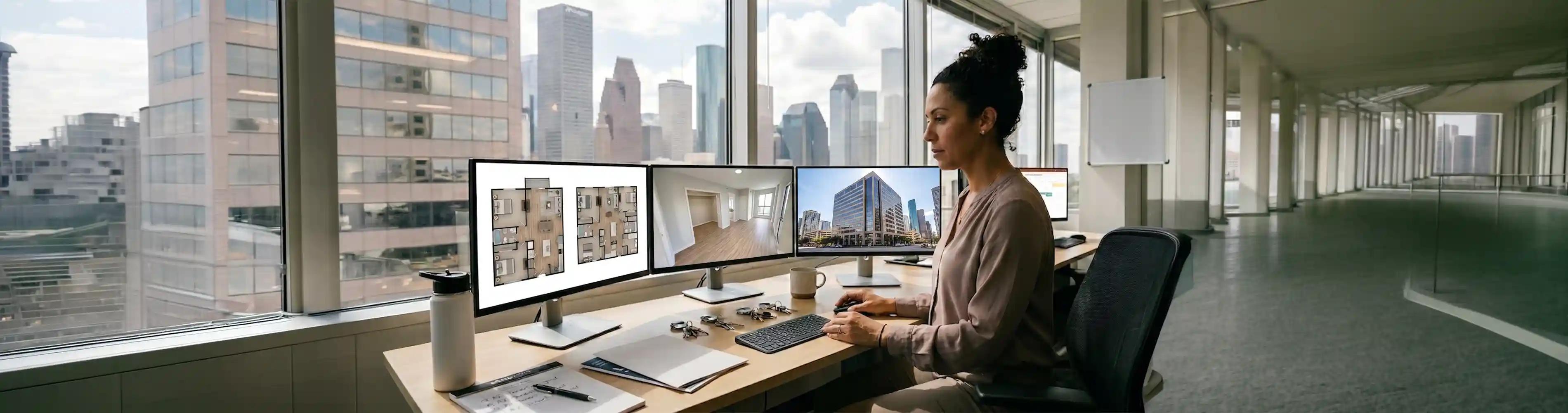
Buildings can be inspected, their layouts reviewed, and amenities examined prior to a meeting being scheduled.
When deciding which projects deserve closer attention in the early stages, this is particularly helpful.
As a result, buyers are able to prepare more specific questions.
It is easier to discuss specific tower types, apartment sizes, and specifications with a representative rather than asking about the entire project.
Sharing property choices with family
It is common for more than one person to be involved in property decisions.
If a buyer has a spouse, parent, or relative living elsewhere, they may want to discuss the possibility of buying an apartment together.
Rather than relying on verbal descriptions, users can examine the same property when a platform allows saved or shared views.
This can make discussions about layouts, unit positions, and preferences more productive.
In order to verify developer claims, remote exploration cannot replace a visit to the neighborhood. It assists buyers in determining what needs further investigation.
How does interactive visualization improve apartment selection?
Visualization becomes more important when buyers move from exploring projects to selecting apartments.
When it comes to that point, details are important.
Orientation and location of floors?
Consider a buyer who is considering two apartments with three bedrooms.
A clubhouse is located on the eighth floor. A second apartment is located on the seventeenth floor, farther from the shared amenities.
It is possible for both to have the same internal area, but their positions create different considerations.
Providing buyers with interactive experiences can help them understand those locations and compare the information available.
Additionally, it can teach them about issues they didn't consider, like the relationship between nearby buildings and balconies.
Connecting unit selection with availability and pricing
There may already be a reservation for an appealing apartment.
With visualization connected to a maintained inventory system, buyers can differentiate between available and no longer available units.
Platforms that support it may also display pricing information alongside selected apartments.
However, buyers should confirm availability, prices, and payment terms with the developer to make sure that the experience is practical.
In order for a visual model to be reliable, it needs to be backed up with accurate information.
How can PropTech improve the conversation between buyers and sales teams?
It is common for buyers to explain their basic requirements to salespeople during their first conversation.
How many bedrooms are there? Which floor is it? What is the budget? What kind of outlook do you have?
Although these questions remain important, digital exploration can help focus the discussion.
Apartments of specific interest
When a buyer is already familiar with the project, he or she may be interested in two or three particular units.
By discussing their differences rather than introducing the product, the salesperson can save the meeting time.
Buyers may ask why one apartment is more expensive, if another floor has a certain layout, or what specifications come with it.
Discussions begin closer to the actual decision.
Keeping property information consistent
It is problematic when a website displays one apartment status while the sales team displays another.
By connecting inventory, CRM, and property information systems, inconsistencies can be reduced.
Furthermore, the system facilitates the transfer of information from an online exploration into a later conversation.
The importance of this cannot be overstated since a good real estate buyer experience requires more than just beautiful visuals.
There is a need for buyers to be able to trust and understand information.
What should developers look for in PropTech solutions?
There is no guarantee that a property will sell if it has a great digital presentation.
Buyers should be able to ask genuine questions and trust the experience throughout the entire sales process.
Clear property visualizations
Buildings should be recognizable, apartments located, and space relationships understood by buyers.
It's important to have a good visual quality, but clarity is equally important.
In a detailed model, visitors are less likely to be able to locate the tower they're interested in or figure out which apartment they selected.
Simple navigation across devices
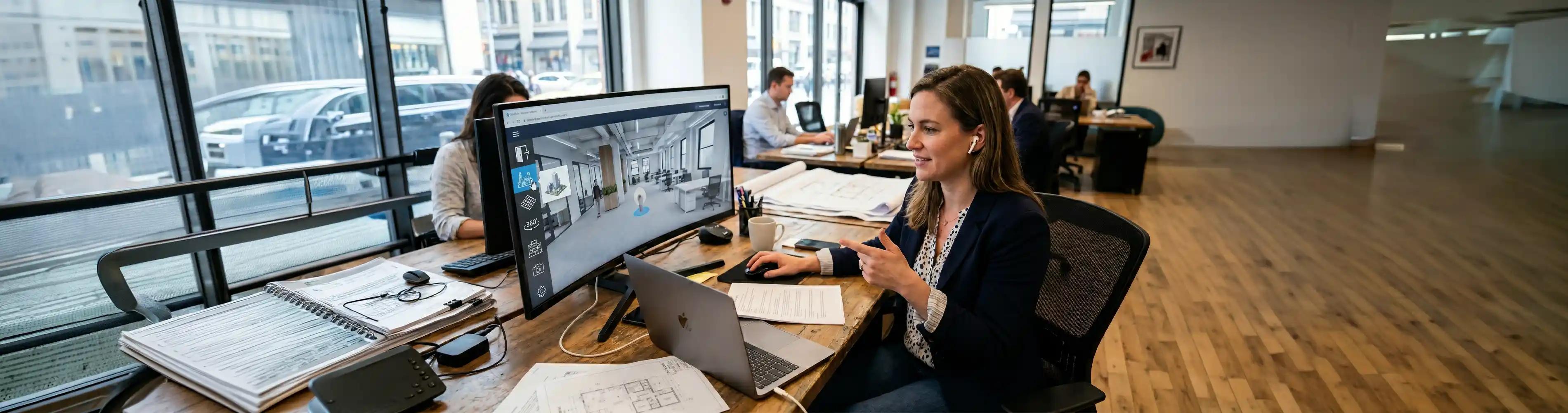
Often, buyers will first encounter a development over the phone.
Buildings should be easy to select, floors should be easy to navigate, units should be easy to examine, and information should be easy to access.
It is also important to consider loading speed and responsiveness.
When a digital model takes too long to open, visitors may not be able to explore it at all.
Managing updates and reliability
The sales lifecycle of off-plan developments changes over time.
It is possible to update project information, reserve apartments, and revise prices.
In order to keep the digital experience current, developers must find a practical way to keep it up-to-date.
The integration of inventory and CRM systems can reduce the number of duplicate updates where appropriate.
It is important for developers to determine who maintains the data and how the changes will be communicated to buyers before selecting a platform.
How can developers measure the value of a digital property experience?
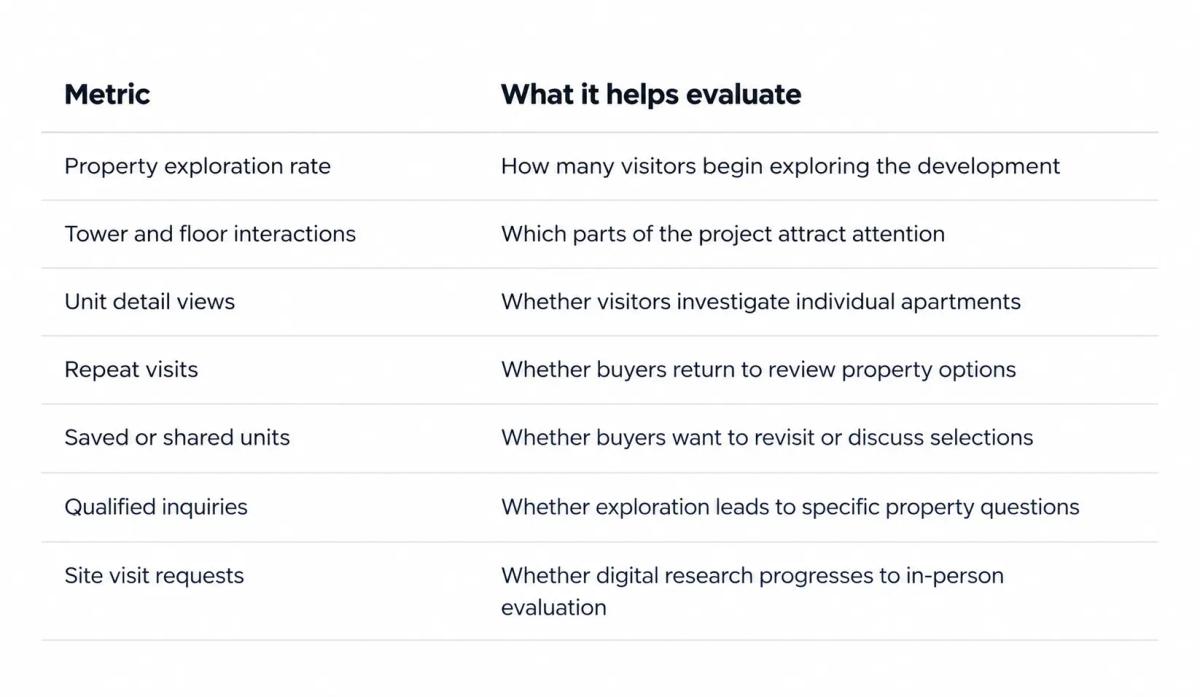
A 3D development's visitor count may be interesting, but it doesn't explain whether it is beneficial for visitors.
The best way to assess the platform is to look at what people do once they enter it.
It is important to interpret these measures together.
Visitors may not be able to locate pricing information or clear next steps if they are engaged with apartment views but do not inquire about them.
If the exploration rate is low, there may be a problem with the loading speed, confusing navigation, or a mismatch between the marketing campaign and the experience.
Digital models aren't just about how many people interact with them.
In other words, it's about how the experience affected their property search.
PropTech can simplify the process of understanding a property. There is no way it can eliminate construction risks, replace legal advice, or guarantee a developer's success.
It is important to recognize that distinction when using technology responsibly.
Conclusion
When buying off-plan property, you must make decisions based on more than just a floor plan.
There is a lot of information buyers need to know, including where their apartment will be situated, what surrounds it, how the apartment compares to other options, and whether the development will meet their requirements.
These questions can be explored more practically through PropTech.
Building proposals can be examined more easily with interactive visualization. Digital twins provide useful information about individual properties. Buyers can investigate developments remotely before visiting them.
The opportunity for developers is to make the property buying journey easier, not just more visually appealing.
The SolidTwin team develops interactive digital twin experiences that help people explore unbuilt real estate developments and understand property options in their context.
The goal is to help buyers get a better sense of what they're thinking about before they make a decision.
Frequently asked questions
What is PropTech in off-plan real estate?
PropTech refers to technology used to present, explore, market, and sell properties before construction is complete. It includes digital twins, interactive 3D visualization, virtual tours, and connected property information systems.
How does PropTech improve the off-plan property buying experience?
It helps buyers explore proposed developments, understand apartment positions, compare layouts, and access relevant information before visiting. This makes early property research more practical.
What is a digital twin in real estate?
A digital twin in real estate is a digital representation of a building or development that can connect visual elements with property information. For off-plan projects, it may include towers, floors, apartments, amenities, and unit details.
How is interactive property visualization different from a virtual tour?
Interactive property visualization can let buyers explore different buildings, floors, apartments, and viewpoints. A virtual tour generally presents selected spaces or a guided route through a property.
Can buyers explore off-plan properties remotely?
Yes. Digital property platforms can allow buyers to examine proposed developments, compare layouts, and review property information remotely. Legal, financial, and project checks remain necessary before purchasing.
Can a digital twin display apartment availability and pricing?
Yes, if the platform is connected to maintained inventory and pricing information. Buyers should confirm current details with the developer before making a booking or payment.
Does PropTech replace visiting a property site?
No. It can help buyers shortlist properties and prepare for site visits, but it cannot replace checking the location, reviewing construction progress, or completing due diligence.
Related Reads
You Might Also Like
Loading blogs
We're gathering the latest articles and insights for you.