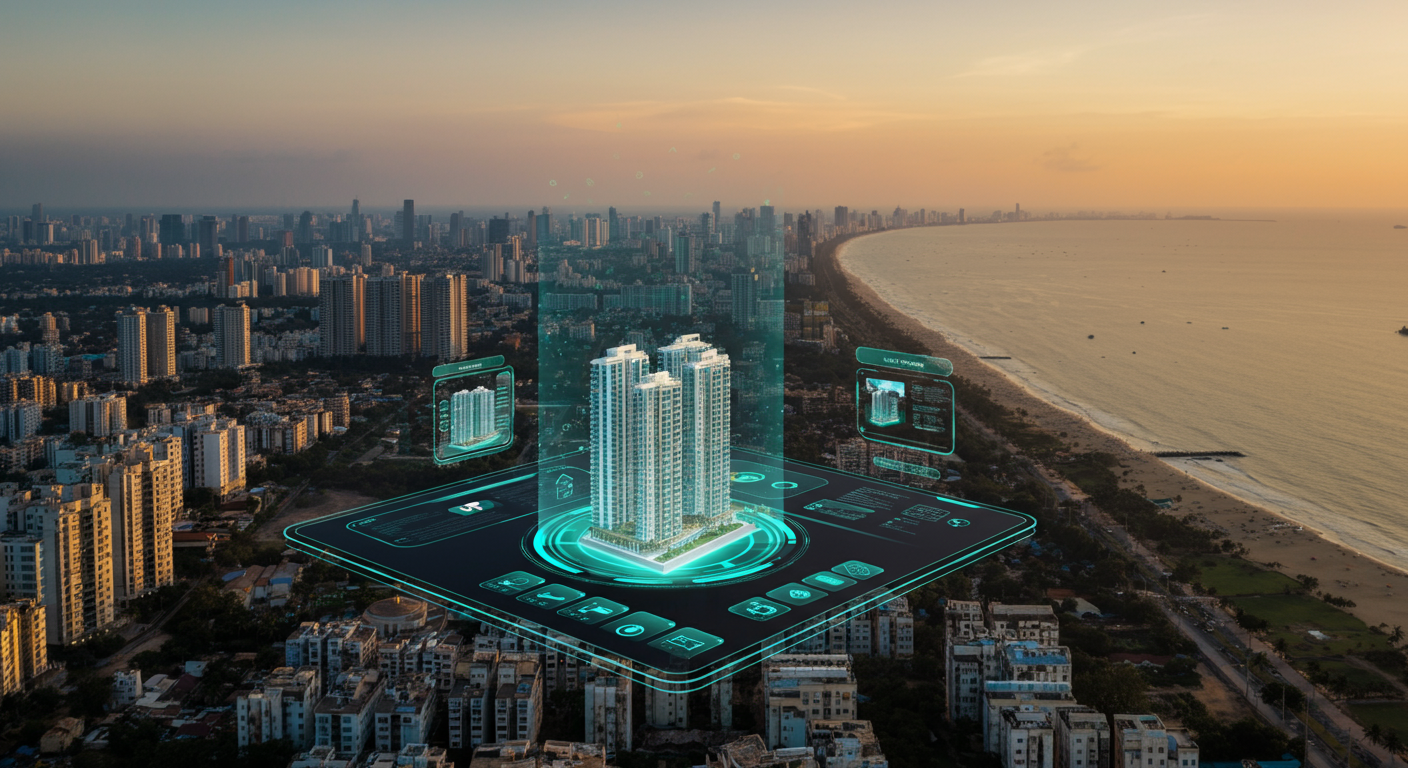
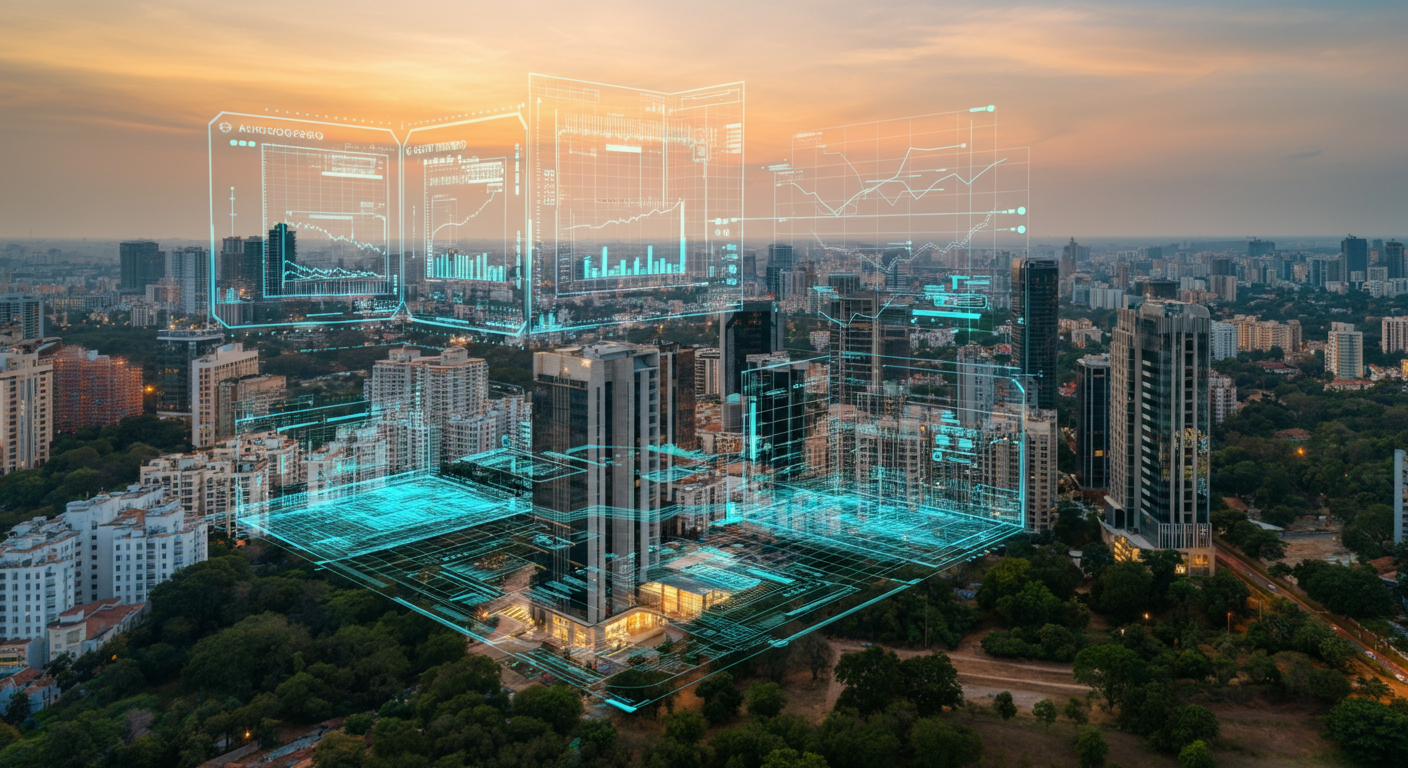
Chennai is rapidly emerging as one of India's most dynamic cities for technology-driven design services. As businesses across real estate, manufacturing, retail, and architecture seek more engaging ways to present their products and spaces, interactive 3D design has become the go-to solution. In 2026, the demand for immersive, interactive visualization experiences in Chennai has never been higher — and the city's growing ecosystem of specialized studios and technology firms is rising to meet it.
Whether you are a real estate developer looking to showcase a new residential project, a manufacturer wanting to demonstrate complex machinery, or a retailer aiming to create a premium digital showroom, Chennai now offers world-class interactive 3D design services tailored to every need. This guide covers the top categories of interactive 3D design services available in Chennai for 2026, helping you identify the right visualization partner for your business.
Why Interactive 3D Design Is Transforming Chennai
Chennai's business landscape has always been forward-thinking, with a strong foundation in IT, manufacturing, and construction. As digital transformation accelerates across every sector, interactive 3D design has emerged as a critical tool for communication, sales, and decision-making. Traditional static renders and 2D floor plans no longer satisfy the expectations of today's clients and customers — they want to explore, interact, and experience before they commit.
Interactive 3D design bridges the gap between imagination and reality. It allows stakeholders to walk through a building before it is constructed, configure a product in real time, or explore a factory floor as a digital twin. For Chennai's booming real estate sector, its thriving manufacturing industry, and its growing retail market, these capabilities translate directly into faster sales cycles, reduced miscommunication, and stronger client confidence.
ℹ️Chennai ranks among India's top five cities for technology adoption in architecture and real estate visualization, with interactive 3D services growing at over 35% year-on-year as of 2025.
Web-Based Interactive 3D Experiences
One of the most accessible and impactful categories of interactive 3D design is web-based interactive experiences. These are fully browser-rendered 3D environments that clients and customers can explore directly from any device — no downloads, no plugins, no special hardware required. Simply open a link and step into a fully interactive 3D world.
Key Benefits of Web-Based Interactive 3D
- Hassle-free access: Clients can view and interact with 3D models instantly from any browser on desktop, tablet, or mobile.
- No downloads required: Eliminates friction in the sales and presentation process, making it easier to share with remote clients.
- Instant viewing: Shareable links allow prospects to explore a project at their own pace, at any time.
- Embeddable on websites: Web-based 3D experiences can be integrated directly into property listing pages, product pages, or marketing microsites.
Chennai-based studios specializing in web-based interactive 3D leverage technologies such as WebGL, Three.js, and Babylon.js to deliver high-fidelity experiences that run smoothly even on mid-range devices. For real estate developers in areas like OMR, Anna Nagar, and Perambur, web-based 3D experiences have become a standard part of the pre-launch marketing toolkit.
Real-Time Interactive Walkthroughs
Real-time interactive walkthroughs represent a significant leap beyond traditional pre-rendered video tours. Instead of watching a fixed camera path through a space, users take full control — they can walk in any direction, open doors, change materials, switch lighting conditions, and explore every corner of a space at their own pace.
This user-driven exploration fundamentally changes how people understand and evaluate spaces. For a prospective homebuyer in Chennai, being able to walk through a 3D apartment and check the view from every window, or test how natural light falls in the living room at different times of day, creates a level of spatial understanding that no brochure or static render can match.
Why Real-Time Walkthroughs Eliminate Confusion
One of the most common challenges in real estate and architecture is the gap between what a client imagines and what is actually being built. Real-time interactive walkthroughs close this gap decisively. When clients can physically navigate a space — even a virtual one — they develop an accurate mental model of the layout, proportions, and flow. This dramatically reduces post-approval change requests and costly revisions.
Chennai's leading interactive 3D studios build real-time walkthroughs using game engines like Unreal Engine 5 and Unity, delivering photorealistic environments with dynamic lighting, realistic material rendering, and smooth navigation. These experiences can be deployed on high-end workstations for sales center presentations or streamed via cloud rendering platforms for remote access.
💡Real-time walkthroughs built on Unreal Engine 5's Lumen lighting system can simulate accurate natural and artificial lighting conditions, giving clients a true sense of how a space will feel at different times of day.
Digital Twin and Real-Time 3D Environment Services
Digital twin technology is transforming how Chennai's industrial and infrastructure sectors plan, operate, and maintain complex assets. A digital twin is not merely a 3D model — it is a living, data-connected replica of a physical asset or environment that mirrors real-world conditions in real time.
For manufacturing plants, logistics hubs, and large-scale infrastructure projects in Chennai, digital twins provide an exact virtual replica of the physical environment. Engineers and facility managers can monitor equipment status, simulate operational scenarios, identify bottlenecks, and test changes — all without touching the physical asset.
Core Capabilities of Digital Twin Services
- Exact replicas: Millimeter-accurate 3D models built from point cloud scans, BIM data, or engineering drawings.
- Functional models: Integration with IoT sensors and live data feeds to reflect real-time operational status.
- Early problem identification: Simulate maintenance scenarios, stress-test systems, and identify failure points before they occur in the physical world.
- Lifecycle management: Track asset performance over time and plan maintenance schedules based on simulated wear and usage data.
Chennai's automotive, aerospace, and heavy manufacturing sectors are among the early adopters of digital twin services. Companies operating large facilities in industrial corridors like Sriperumbudur and Ambattur are leveraging digital twins to optimize production workflows, reduce downtime, and improve safety compliance.
Interactive Product Configurators and VR/AR Experiences
Interactive product configurators are changing the way Chennai's retail and manufacturing businesses engage with their customers. Instead of presenting a fixed product catalog, businesses can now offer customers a real-time 3D configuration experience — allowing them to choose colors, materials, sizes, and features, and see the result instantly rendered in photorealistic 3D.
Building Customer Confidence Through Real-Time Customization
The ability to customize a product in real time and see exactly what you will receive before placing an order is a powerful confidence builder. For high-value purchases — whether a luxury kitchen, a custom vehicle, or a bespoke piece of furniture — interactive configurators reduce purchase hesitation and increase conversion rates significantly.
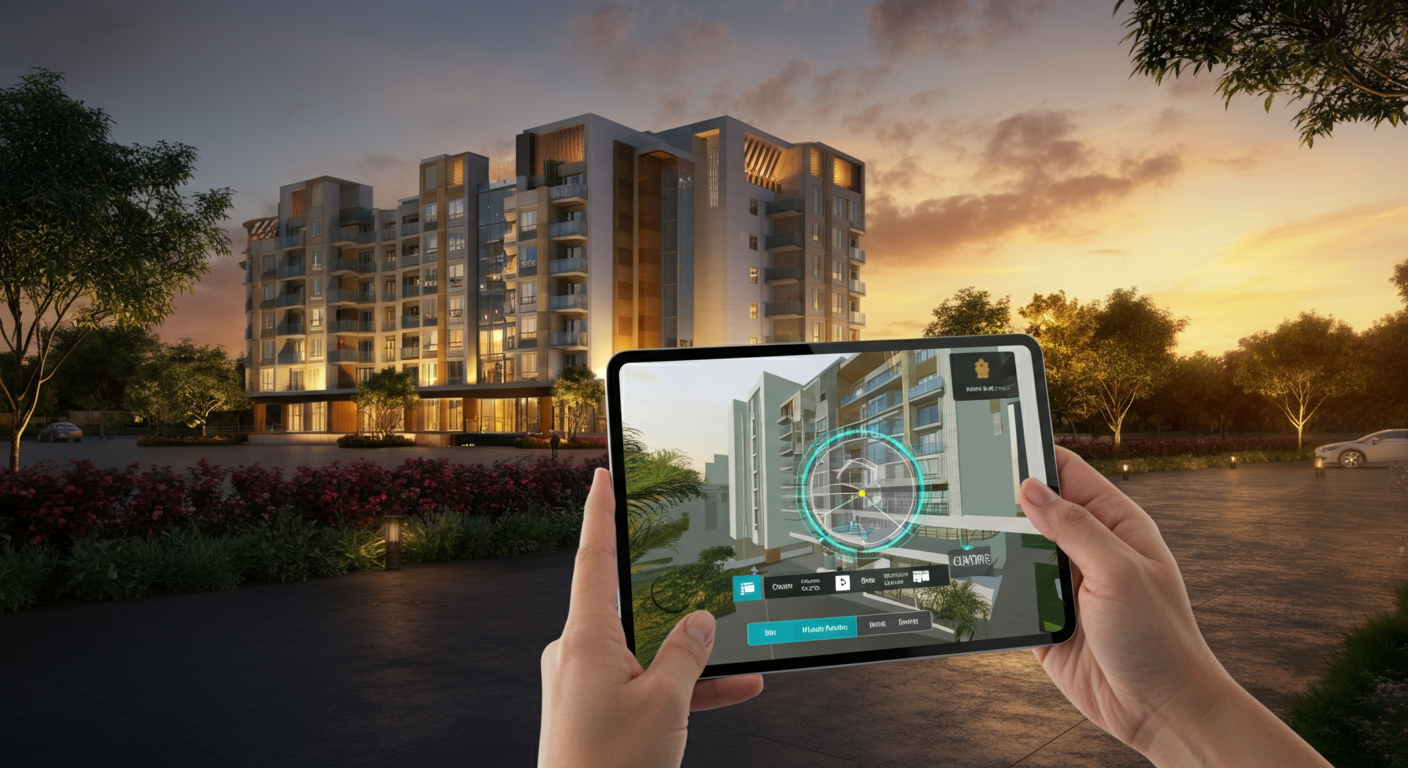
VR and AR take this a step further. With VR interactive experiences, customers can step inside a virtual showroom and interact with products at full scale. With AR, they can place a virtual product in their own physical environment using a smartphone or tablet — seeing exactly how a sofa will look in their living room or how a machine will fit in their factory floor.
Chennai's furniture, automotive, and consumer electronics sectors are leading adopters of interactive product configurators and VR/AR experiences. The emotional connection created by immersive visualization — the ability to truly see and feel a product before buying — is proving to be a decisive factor in purchase decisions.
❗Studies show that interactive 3D product configurators can increase online conversion rates by up to 40% compared to static product images, while also reducing product return rates by giving customers a more accurate expectation of what they are purchasing.
360° Virtual Tours and Immersive Environments
360° virtual tours have evolved far beyond simple panoramic photo stitching. Today's immersive 3D virtual tours are fully rendered, interactive environments that give users complete control over their exploration experience. Users can navigate between rooms, zoom into details, access embedded information hotspots, and experience a space with a level of realism that closely mirrors being there in person.
User Control and Realistic Engagement
The defining characteristic of a great 360° virtual tour is user agency. Rather than being a passive viewer of a pre-scripted video, the user is an active explorer. They decide where to go, what to look at, and how long to spend in each area. This active engagement creates a much stronger sense of presence and a more memorable experience.
For Chennai's hospitality, education, and healthcare sectors, 360° virtual tours are becoming an essential marketing and communication tool. Hotels can showcase their rooms and facilities to international guests. Universities can offer virtual campus tours to prospective students across India and abroad. Hospitals can familiarize patients with their facilities before admission, reducing anxiety and improving the patient experience.
Advanced 360° virtual tour services in Chennai also incorporate interactive 3D visualization with clickable layers — allowing users to click on elements within the environment to access detailed specifications, pricing information, or embedded media. This transforms a virtual tour from a passive viewing experience into an interactive sales and information platform.
Immersive Virtual Showroom Services
The concept of the virtual showroom has matured significantly in recent years. What began as a simple 3D gallery has evolved into a fully immersive, interactive environment that replicates — and in many ways surpasses — the experience of visiting a physical showroom. For Chennai's luxury real estate, automotive, and high-end retail sectors, immersive virtual showrooms are becoming a cornerstone of the premium customer experience.
What Makes a Virtual Showroom Truly Immersive
A truly immersive virtual showroom goes beyond displaying products in a 3D space. It creates a branded environment with carefully designed lighting, spatial audio, interactive product displays, and guided navigation flows. Visitors can examine products from every angle, access detailed specifications, compare options side by side, and even speak with a sales representative via integrated live chat or video call.
- Interactive environment: Fully navigable 3D space with realistic product displays and branded design elements.
- Premium experience: High-fidelity rendering, spatial audio, and smooth navigation create a luxury feel that reinforces brand positioning.
- Always open: Virtual showrooms are accessible 24/7 from anywhere in the world, extending the reach of physical showrooms without additional overhead.
- Integrated sales tools: Embedded configurators, pricing calculators, and CRM integrations turn the showroom into a complete sales platform.
Chennai's automotive dealerships and luxury real estate developers have been among the first to embrace immersive virtual showrooms, using them to reach NRI buyers and out-of-city investors who cannot visit physical locations. The results have been compelling — virtual showroom visitors show higher engagement rates and stronger purchase intent than those who only view static listings.
Interactive Training and Simulation Environments
Beyond sales and marketing, interactive 3D environments are proving transformative in training and simulation. Chennai's industrial, healthcare, and defense sectors are increasingly using interactive 3D simulation environments to train personnel in complex, high-stakes procedures without the risks and costs associated with real-world training.
Risk-free practice in a realistic virtual environment allows trainees to make mistakes, learn from them, and build competence without any real-world consequences. Research consistently shows that simulation-based training improves learning retention rates by 60–75% compared to traditional classroom instruction. For Chennai's growing aerospace and manufacturing sectors, this translates into a more skilled, safer, and more productive workforce.
💡Interactive 3D training simulations are particularly valuable for emergency response training, equipment operation, and complex assembly procedures — scenarios where real-world practice is either too dangerous or too expensive to conduct at scale.
How These Services Change the Buying Process and Future Trends
The cumulative impact of interactive 3D design services on Chennai's real estate and commercial markets is profound. The traditional buying process — characterized by multiple site visits, lengthy deliberation, and high uncertainty — is being replaced by a more efficient, confident, and satisfying experience for both buyers and sellers.
Transforming the Real Estate Buying Journey
In Chennai's competitive real estate market, interactive 3D services are compressing the sales cycle significantly. Buyers who have explored a property through an interactive walkthrough or virtual tour arrive at site visits with a much clearer understanding of the space. They have already resolved many of their questions virtually, which means site visits are more focused and decision-making is faster.
For NRI buyers and investors based outside Chennai, interactive 3D services have been particularly transformative. The ability to thoroughly explore a property from Singapore, Dubai, or London — and to do so with the same level of detail and confidence as an in-person visit — has opened up Chennai's real estate market to a much wider pool of buyers.
Why Chennai Is Becoming a Hub for Interactive 3D Design
Several factors are converging to make Chennai a leading center for interactive 3D design services in India. The city's strong IT infrastructure provides the technical foundation for cloud-based rendering and real-time streaming. Its large pool of engineering and design talent — drawn from institutions like IIT Madras, Anna University, and NIT Trichy — provides the human capital to build sophisticated interactive experiences.
Chennai's diverse industrial base — spanning automotive, aerospace, manufacturing, real estate, and retail — creates a broad and growing demand for interactive 3D services across multiple sectors. This diversity drives innovation, as studios develop solutions for one sector that find applications in others.
Future Trends in Interactive 3D Design
Looking ahead, several key trends will shape the evolution of interactive 3D design services in Chennai and beyond:
- AI Integration: Artificial intelligence will enable more intelligent, responsive interactive environments — spaces that adapt to user behavior, generate personalized content, and automate the creation of 3D assets from 2D drawings or text descriptions.
- Advanced Web Platforms: Next-generation WebGPU and WebXR standards will bring console-quality 3D graphics and immersive VR/AR experiences directly to web browsers, eliminating the need for dedicated apps or hardware.
- VR/AR Mainstream Adoption: As headset prices fall and device quality improves, VR and AR interactive experiences will move from premium novelty to standard business tool across real estate, retail, and industrial sectors.
- Increased Cross-Sector Adoption: Interactive 3D design will expand beyond its current strongholds in real estate and manufacturing into healthcare, education, government, and smart city planning.
- Real-Time Collaboration: Multi-user interactive 3D environments will enable distributed teams and clients to collaborate in shared virtual spaces, reviewing designs and making decisions together regardless of physical location.
Chennai is well-positioned to be at the forefront of these trends. With its combination of technical talent, industrial diversity, and entrepreneurial energy, the city's interactive 3D design ecosystem is set to grow significantly in the years ahead. For businesses looking to stay ahead of the curve, partnering with a Chennai-based interactive 3D design studio in 2026 is not just a smart investment — it is a strategic imperative.
ℹ️SolidTwin offers end-to-end interactive 3D design services in Chennai — from web-based experiences and real-time walkthroughs to digital twins, VR/AR, and immersive virtual showrooms. Contact us to discuss how interactive 3D visualization can transform your business.